
Become a supporter
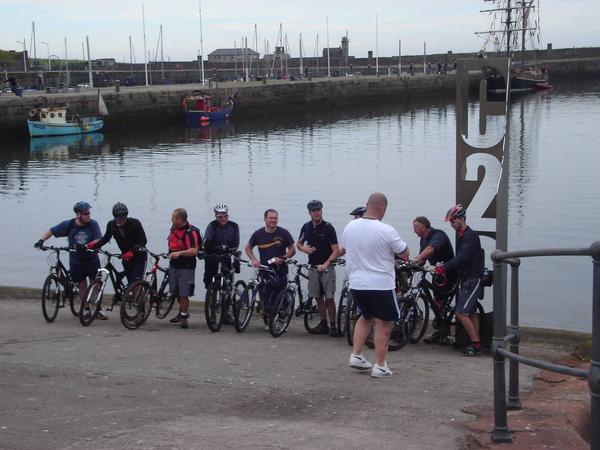
Britain’s most famous signposted cycle route, the C2C, is celebrating its 20th birthday this year – and Sustrans is marking the occasion with an anniversary bike ride.
Opened in 1994, the route now attracts up to 15,000 cyclists every year. Popularly thought to stand for ‘Coast to Coast’, the name is actually short for ‘Sea to Sea’: it offers a scenic route from Cumbria to the North Sea via quiet roads and off-road tracks.
The anniversary ride will take three days from Whitehaven to Tynemouth – the standard length for most riders, though the record stands at just under eight hours. Participants will be asked to raise £300 sponsorship or more to help Sustrans with the upkeep of the route, which includes numerous railway paths and bridges.
Places on the ride cost £245 including accommodation, luggage transfer, route guides, and a 20th anniversary pack. The practicalities will be taken care of by cycle holiday specialists Saddle Skedaddle, who will be hosting a party at their Newcastle Cycle Hub base to mark the completion of the route.
You can find out more and book a place via the Sustrans website.
Read about the route with our full C2C guide.

New cycle route signs are being erected around Telford to guide Land’s End to John O’Groats cyclists away from a lethal road.
The A442 dual carriageway became notorious in 2010 when cyclist Arthur Platt was killed on the road. He was cycling from ‘End to End’ to raise money for Help for Heroes. The driver in the accident, Stuart Cook, was subsequently imprisoned for 12 months for causing death by dangerous driving: a court heard how he had leaned down to pick up a satnav which had fallen off his dashboard.
Telford & Wrekin Council is now planning signs to direct cyclists away from the road. Following suggestions from the Telford & Wrekin Bicycle Users Group, they say that long-distance riders would be much safer on the former A442, now declassified – a quieter road via Wellington which avoids Telford.
The signposted alternative route will give distances to Bridgnorth in one direction and Whitchurch in the other, and will be expressly signed ‘Land’s End to John O’Groats’ at each end. In addition, dropped kerbs will be installed to give cyclists safer passage around the roundabout at Stirchley.
Although there is no single official route for ‘LE-JoG’, many cyclists choose to go through the Shropshire borders as a direct and reasonably flat route – taking them directly through Telford.

The crackdown on lorries that endanger London’s cyclists is to be extended, following a successful six-month trial. Meanwhile, the London Cycling Campaign is stepping up its campaign to improve HGV design.
Over half of cyclist deaths in London during the last five years involved a Large Goods Vehicle – and over time, the figures were getting worse, not better. A study by Transport for London found that “in 2011, seven out of nine cycle fatalities involved Heavy Goods Vehicles in the construction and waste industries despite HGVs making up only 4 per cent of road miles driven”.
The ‘Industrial HGV Task Force’ was set up in September 2013 to tackle this. Described as “intelligence-led”, its 16 full-time officers work in motorcycle patrols, with Automatic Number Plate Recognition cars, and mobile inspection vans to find dangerous lorries. Highly visible patrols seek to “ensure that the presence of the IHTF is well known to drivers and operators, creating a visible deterrent to non-compliant operators from entering London”.
Over the first six months, the Task Force targeted almost 2,000 lorries. The results were terrifying. Of the vehicles targeted and stopped in the construction and waste industries, 72% were found to be non-compliant. As the study explains:
“This figure is significantly higher than we would expect from general population of commercial vehicles on London’s roads. As a comparator, the Fleet Compliance Check Report found only 9.9% of GB vehicles to be non-compliant.”
Of these, 24 have been seized, 15 owners prosecuted, and 519 fixed penalty notices issued. Common offences were:
Concrete mixers were particularly dangerous, with only one in eight compliant. TfL is to lobby central Government for legislation to be tightened up on these.
Transport Minister Stephen Hammond said:
“We are determined to do all we can to tackle dangerous HGVs, which are a safety risk to cyclists, pedestrians and other motorists. 'The Task Force has clearly been a great success, but the number of dangerous goods vehicles that have been stopped and fined underlines just how necessary it is for work to continue.”
Transport for London, the Department for Transport and London councils are now proposing a safer lorry scheme. The proposed scheme will require every vehicle in London over 3.5 tonnes to be fitted with sideguards to protect cyclists from being pulled under the wheels. It will also require vehicles to be fitted with mirrors, giving the driver a better view of cyclists and pedestrians around their vehicles. The Industrial HGV Task Force would ensure on-street enforcement of the requirements.
London Cycling Campaign wants them to go further. It is calling for all but ‘direct vision lorries’ to be banned from urban areas. Direct vision lorries have a lower driving position, and large glass areas to the front and side that give the driver a direct view of pedestrians and cyclists in close proximity to their vehicle.
The European Parliament is considering such legislation, but national Governments could prevent this being introduced – and the British Government is one that is currently opposed. LCC is asking cyclists to email their MEPs to express support, helping strengthen their position in the followup negotiations.

Sustrans and the Scottish Government have announced £14m of grants to build better cycle routes across Scotland. Added to an extra £18m from councils and other partners, the money will pay for over 130 projects.
The ‘Community Links’ schemes range from urban cycling improvements to rural cycleways bypassing busy A roads, and from the Borders to Shetland and Orkney. Among the projects are:
The biggest winner is Edinburgh, where the already announced scheme to improve Leith Walk – which promises “significant sections of uninterrupted cycle space including sections of dedicated on and off road cycling” – has been joined by a new path from the Meadows and the Innocent Railway Path to the Union Canal towpath. Meanwhile, in Glasgow, a two-mile stretch of shared use path will be put in place along the south bank of the River Clyde from Richmond Park to the Tradeston Bridge.
Sustrans says this is the first time that such large-scale ‘exemplar’ projects have been funded. Tom Bishop from Sustrans said:
“It is clear that there is a real appetite to improve cycling facilities across Scotland as we received an all-time record high number of applications to our Community Links Programme this year – over 200 in total. The installation of these new cycling facilities will give people the opportunity to travel actively on a regular basis.”
Transport Minister, Keith Brown, added:
“I am encouraged by the number of local authorities who have put forward exemplar projects which could make a difference to helping more people to walk and cycle for everyday local journeys. This programme will help to deliver our commitment to the shared vision as reiterated in the Cycling Action Plan for Scotland 2013, that by 2020 10% of all journeys will be by bike.”
A new cycle and pedestrian bridge has been installed over the notorious A14 in Bury St Edmunds, reuniting two halves of the town separated by this busy road.
The bridge is designed to provide pedestrians and cyclists with improved access to Bury Town Centre, connecting the residential area on the south of the A14 at Thingoe Hill, with the industrial estate on Northgate Avenue. It was lowered into place overnight at the weekend, with crowds gathering to watch the cranes do their work.
Councillor Graham Newman from Suffolk County Council said:
“I’m glad to see this fantastic new bridge finally come to fruition. The connection between one side of Bury with the other is currently made difficult with the A14 running through the town. This bridge will provide a quick and safe link for pedestrians and cyclists to get into town, and I’m confident that many people will reconsider their mode of transport when they realise just how quick and convenient their journey can be.”
The £1.5m bridge is not yet open for use, pending work on the approaches and the installation of new lighting. The opening date has not been confirmed but is expected to be later in April.
However, local Green councillor Julia Wakelam told the East Anglian Daily Times that she was sceptical: “It’s a huge amount of money. If we’re going to spend this amount of public money, it’s got to work for that money – we can’t create a white elephant of a bridge.” Other residents told the paper they thought it was “clumsy” and “unnecessary”.
Meanwhile, £1.5bn is to be spent on the A14 in nearby Cambridgeshire to make motorists’ journeys shorter.


Made in the Cotswolds. Published by Éditions Système D Ltd.
Log in with your cycle.travel account:
| Password |
Or simply use your account on:
