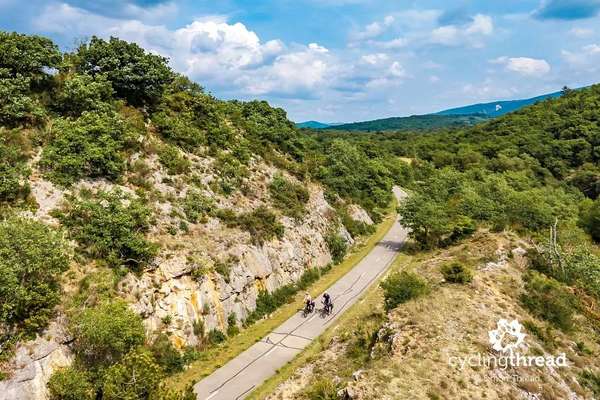
The cycle route around Luberon in Provence offers one of the most rewarding ways to discover this partof France. Stretching through vineyards, orchards and rolling limestone hills, it links a remarkable collection of historic villages and small towns. Quiet local roads, frequent viewpoints and a relaxed pace of life make the journey particularly attractive for cycle travellers. Despite regular climbs, the route remains accessible and reveals a side of Provence that is often missed by visitors travelling by car. Over several days, cyclists can experience both the natural beauty and cultural heritage that define the region.
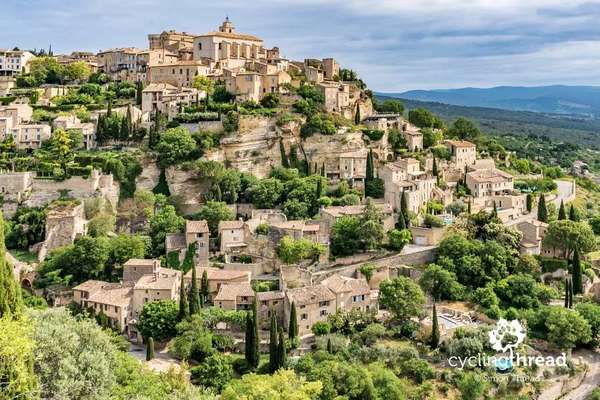
Few places capture the character of Luberon better than Gordes. Perched dramatically on a hillside, the village seems to emerge directly from the surrounding rock, creating one of the most iconic landscapes in Provence. Narrow streets, stone houses and historic landmarks reflect centuries of local history. Even with its popularity among visitors, Gordes retains much of the atmosphere that has made it one of the most admired villages in France. The panoramic views from the village are among the highlights of any journey through Luberon.
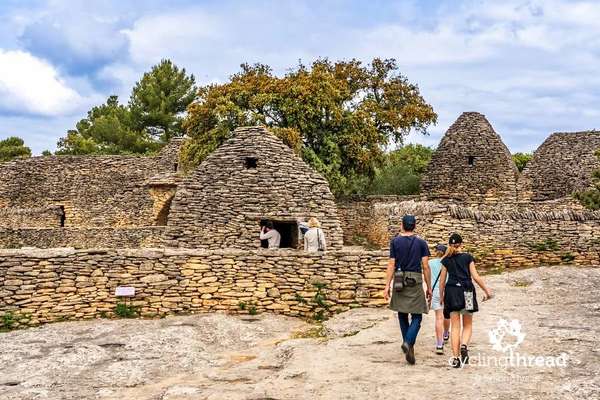
Just outside Gordes lies the Village des Bories, one of the region's most unusual historical attractions. The settlement consists of traditional dry-stone huts built entirely without mortar, using limestone collected from nearby fields. These structures illustrate how local communities adapted to the demanding landscape and made practical use of available materials. Today, the site offers a rare opportunity to explore an important part of Provence's rural heritage. Walking between the stone buildings provides a fascinating glimpse into everyday life in earlier centuries.
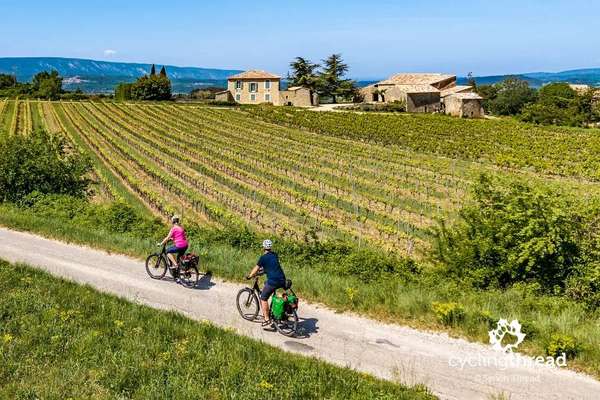
The route follows long sections of the Véloroute du Calavon, one of the best-known cycling paths in Provence and part of EuroVelo 8 - the Mediterranean Route. Built largely on a former railway line, it provides a comfortable and largely traffic-free connection between towns and villages across the valley. Gentle gradients, attractive scenery and dedicated cycling infrastructure make it suitable for a wide range of cyclists. As a section of the European route linking Spain with Cyprus, it also highlights the growing importance of Provence as a destination for cycle tourism. Many travellers use this route as an easy way to explore the heart of the Luberon region.
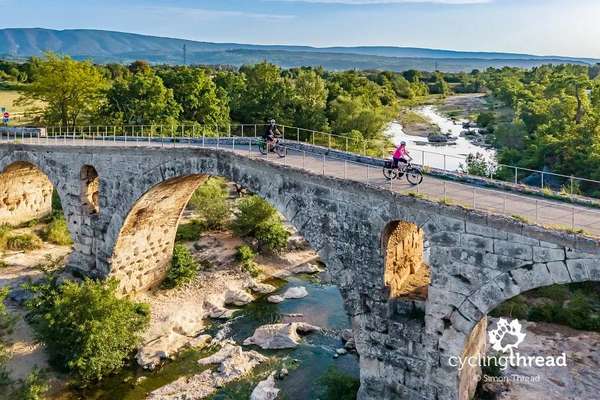
Evidence of the region's long history can be found at Pont Julien, a Roman bridge built more than two thousand years ago on the ancient Via Domitia. Constructed from local stone, it continues to span the Calavon valley and remains open to cyclists and pedestrians. Its elegant arches and remarkable state of preservation make it one of the most impressive historical monuments along the route. Passing over the bridge offers a direct connection with the travellers who crossed this landscape in Roman times. Few cycling routes in Europe allow riders to encounter such well-preserved Roman infrastructure so closely.
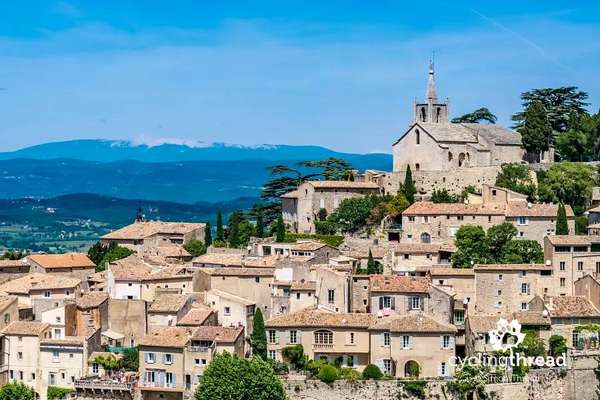
Further along the route, Bonnieux rises above the surrounding countryside and rewards visitors with wide views across the Luberon hills. Steep lanes lead towards the old church at the highest point of the village, while lower streets are lined with traditional stone buildings and shaded squares. The village was once part of the Papal States, adding another chapter to the rich history of the region. Today, historical heritage and everyday village life exist side by side. Its elevated position makes Bonnieux one of the most scenic stops along the route.
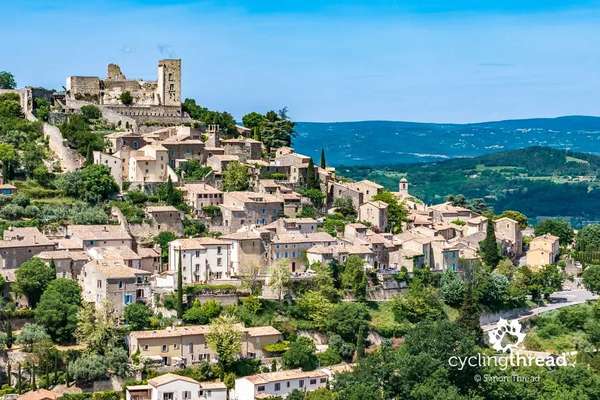
A different atmosphere awaits in nearby Lacoste. Dominated by the former castle of the Marquis de Sade, the village combines medieval architecture with a strong contemporary cultural presence. Public spaces display modern artworks, while educational and artistic institutions have brought new life to the historic streets. The result is a place where centuries-old buildings and modern creativity coexist in an unusual but successful balance. This blend of history, culture and architecture gives Lacoste a distinctive identity within the region.
Together, these places show why cycling feels like such a natural way to experience Provence. Travelling by bike allows time to appreciate the details of village life, historical monuments and changing landscapes between destinations. Quiet roads and a well-connected network of local routes make exploration both comfortable and enjoyable. In our opinion, one of the greatest strengths of Luberon is the balance between famous attractions and the peaceful countryside that surrounds them. Whether on traditional bicycles or e-bikes, we found a region where culture, scenery and everyday Provençal life blend together in a way that is difficult to experience from behind a car window.
Check out more from Luberon at www.cyclingthread.com :-)
And don't miss our other posts on cycle.travel:
- Waterline Route in the Netherlands
- Elbe Cycle Route in Germany
- Ciclovia Alpe-Adria - Austria & Italy
- Loire by bike in France
- Rhine Cycle Route in Switzerland
- Tauber-Altmühl Radweg in Franconia