
Become a supporter
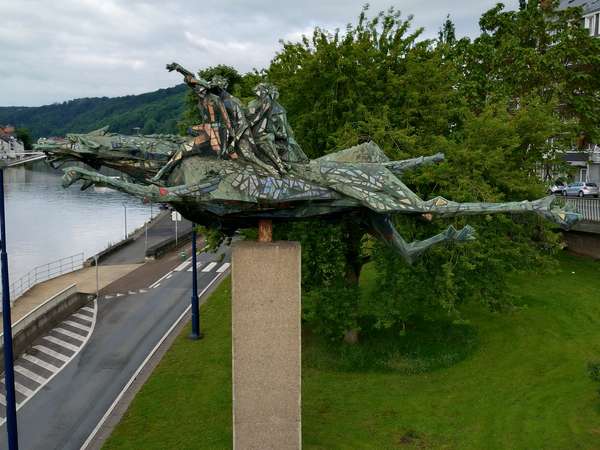
Starting along the River Meuse, and the sight of Le Cheval Bayard, an abstract statue by Olivier Strebelle of the mythical horse Bayard leaping over the river. Among Bayard’s magical feats was the ability to adjust his size to his riders: the statue depicts him carrying the four adult sons of Duke Aymon.
Over the Pont des Ardennes and onto Eurovelo Route 3 (the Pilgrim’s Route), which runs alongside the wide and slow Meuse to Liège. The route crosses the Meuse at Pont de Seraing (Seraing was where the major steel foundry was established by John Cockerill, born in Lancashire and later Belgian citizen). The cycle route is unpleasant here, crossing busy roads, and the route signs are difficult to spot if you don’t have a cycling computer for navigation. I find this is not uncommon: cycle routes and signing tend to disintegrate in town centres just when you need this most, maybe somebody should do a study.
At Vaux sous Chèvremont the route starts to follow a disused railway line, smoothly resurfaced and gradually climbing. The cycle route crosses local roads at various places, and road traffic has right of way, but I was impressed that often car drivers stopped to let me cross. I was grateful to refuel at the artisan Boulangerie Louise, adjacent to Ligne 38. I was hoping to have some of the wonderful tarte au riz (rice pudding tart), but none was to be found. Alas, the Eurovelo route doesn’t take you through Verviers, where this delicacy is a spécialité typiquement Verviétoise – a blunder on my part for not planning a detour. We need this in the UK urgently.
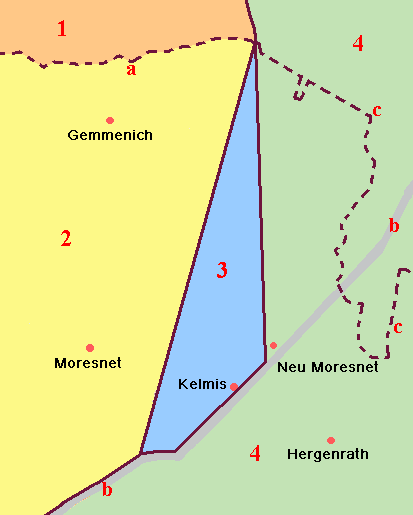
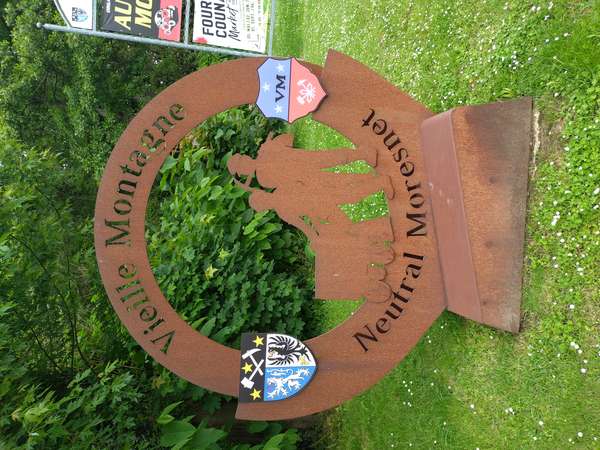
At Plombières, I took a short detour to visit Kelmis (La Calamine). From 1816 until 1921 this was a separate country, wedge-shaped and only 1.5 km x 5 km: the micro-state of Neutral Moresnet. This was once dominated by a large zinc spar mine operated by the Vieille Montagne company (VM), which continues as part of the multinational Umicore. The 1910 company building in Kelmis is now the Museum Vieille Montagne (MVM). This mine was exhausted in 1885, but the state continued, until swept away by WW1 and its aftermath.
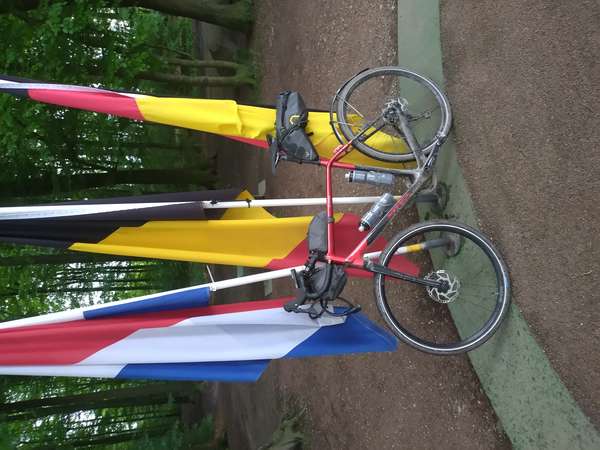
Raining now, but continued the climb on the hairpins up to Trois Bornes/Drielandenpunt/Dreiländereck – the three-country point where Belgium, Germany and Netherlands meet, and is also the highest point in the Netherlands (Vaalserberg).
Descended again and into Aachen and to overnight accommodation. Terrible traffic at the inner ring road: Polizei on duty at junctions to prevent them jamming, but horns blaring out of impatience. Distance today 141 km, elevation 788 m (cycle.travel estimate 613 m).
Enthused by last year’s Flanders cycling tour, I wanted to explore the southern, Wallonie, part of Belgium, and I was also drawn to go over the border into Germany and Luxembourg to ride the Vennbahn cycle route. There is no direct Wallonie equivalent of the Vlaanderen Fietsroute, but I looked to use sections of the Eurovelo Routes 3 and 5 which cross at Namur, and spent many a happy hour using cycle.travel to develop a suitable route. And this is it.
But first the prologue to the tour. On the previous day I took the Dover-Dunkerque ferry and rode along the coast to the border and the start of the Belgian rail network at Adinkerke-De Panne, then the train to Brussel-Zuid before an overnight stop. Only €8,30 plus €4,00 bike supplement, or £10.60, for the two-hour journey into the capital and (great celebrations) no insistence on setting up an online account and with an over-65 discount without being forced to buy a senior railcard. Be aware that, although Belgian trains have multiple bicycle carriages, there are three substantial steps up and down, which could be difficult if you have an e-bike or are heavily-laden.
De Panne is home to the bonkers seagull imitation competition (Europees Kampioenschap Meeuwenschreeuwen). Seriously – see www.gullscreeching.eu – a splendid reason for a party. It was won by Simão João from Portugal in 2024.
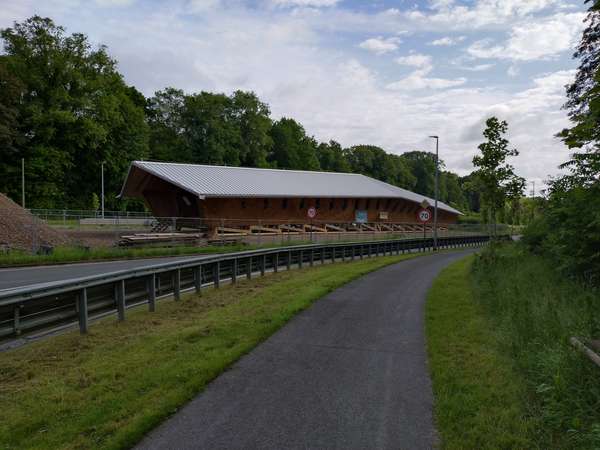
Starting the tour properly on the Monday morning, I left Brussels through Parc du Cinquantenaire and picked up Eurovelo Route 5 (Via Romea), many bicycle commuters heading in the opposite direction into the city centre on the F29 Brussels-Leuven bicycle highway. The cycle path runs along the northern edge of the Sonian Forest (Forêt de Signes), and I had hoped to ride over a new cycle bridge that will cross the Vierarmen J0 junction of the Brussels ring road. Alas, the roofed timber bridge structure is still sitting nearby waiting for the behind-schedule ramps to be completed.
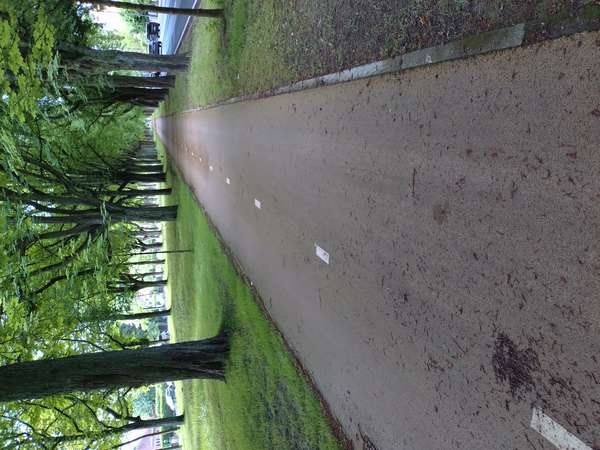
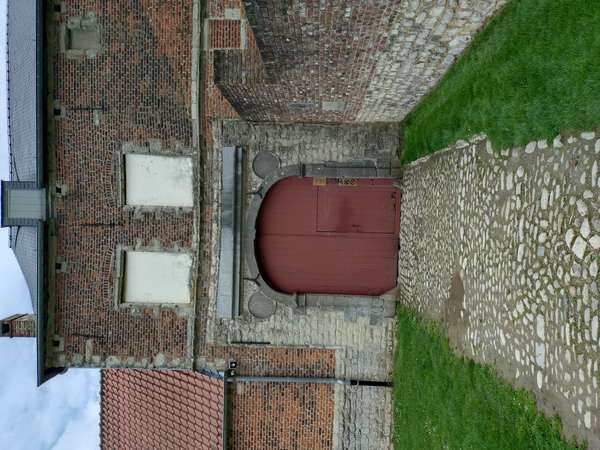
Onwards along rougher tracks in the Kapucijnenbos (Capuchin Wood), and away from Eurovelo 5 to reach the site of La Bataille de Mont Saint-Jean (Battle of Waterloo). Then (Sunday 18 June 1815) as now, the site is rolling agricultural land with two barely-noticeable ridges separated by a shallow valley. You do get a sense of the extraordinary density of the warfare: around 190,000 soldiers fought in an area about 2 km by 2 km. First to La Ferme de Hougoumont (Hougoumont Farm), the walled manor compound at the western edge of the site where a battle-within-a-battle was fought throughout the day. The château (manor house) itself has gone, but the compound walls (with loop holes) and gate benefitted from bicentennial restoration (see wwwprojecthougoumont.com). There is a museum, but this is only open at weekends out of the summer season.
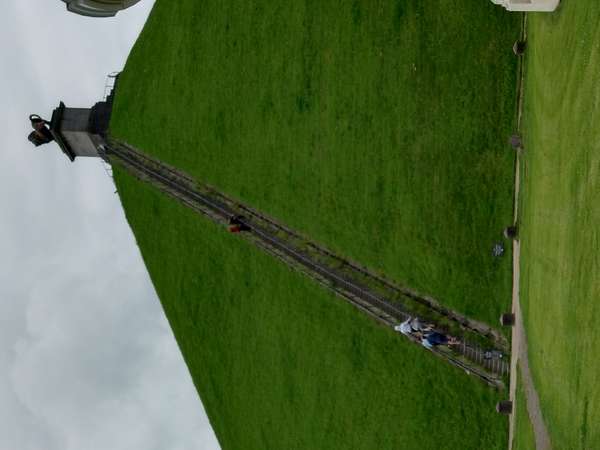
The battlefield site is dominated by the 40-metre-high artificial hill of La Butte de Lion/Leeuw van Waterloo or Lion’s Mound. Although it gives a panoramic view of the site, I was not tempted to pay €17,50 to climb the 2 x 226 steps in cleated cycling shoes.
Rode on to the other side of the site to La Belle Alliance and Observatoire de l’Empereur, the base for Bonaparte during the battle, then back to Eurovelo 5 and through the grounds of Château de la Hulpe, once home to Ernest Solvay (1838-1922), developer of the ammonia-soda Solvay process and founder of Solvay & Cie which is still a multinational chemical company.
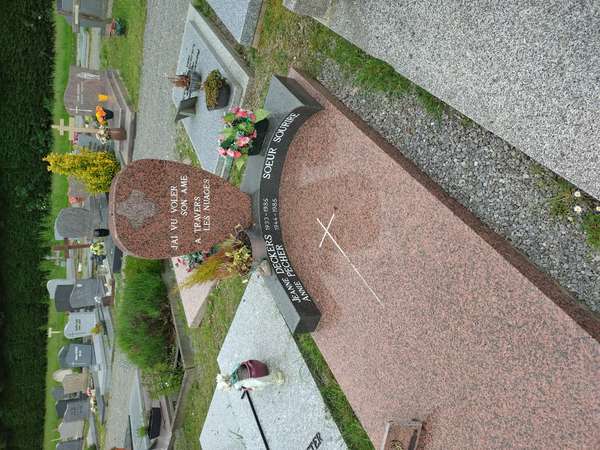
I continued through Wavre, and took a brief detour to Chérémont cemetery to find the grave of Jeanne-Paul Marie Deckers (1933-1985). Ms Deckers was a one-hit wonder in 1963 as the Singing Nun.
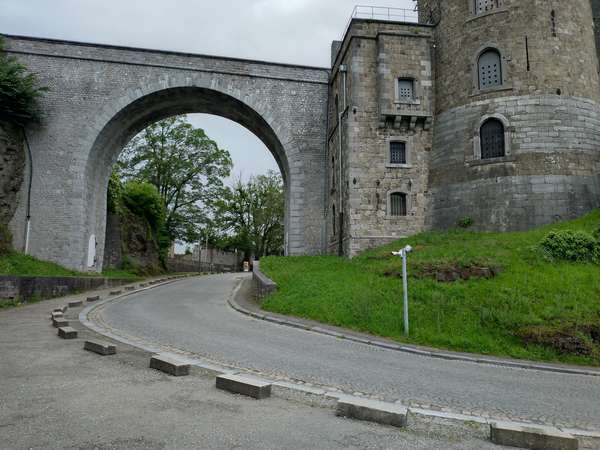
Thereafter past the Centre géographique de la Belgique, and through farmland to Namur. It was early in the tour, so had enough energy to climb to La Citadelle via the hairpins of the Route Merveilleuse, with its 270° loop up and over, before an uncomfortable descent (forced to walk) down the rough cobbles of Route des Canons back into the centre of Namur. Distance today 132 km and 1226 metres of elevation (as measured by Wahoo Elemnt Roam, cycle.travel estimate 1040 m).
Beverley to Wakefield. An early start in order to get ahead of some more forecast rain, which did materialise for the last hour.
One further BCQ checkpoint at Howden, then back to Wakefield to catch the pre-booked return train.
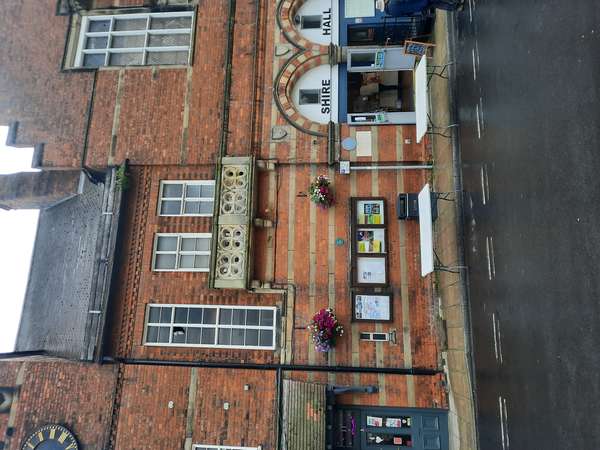
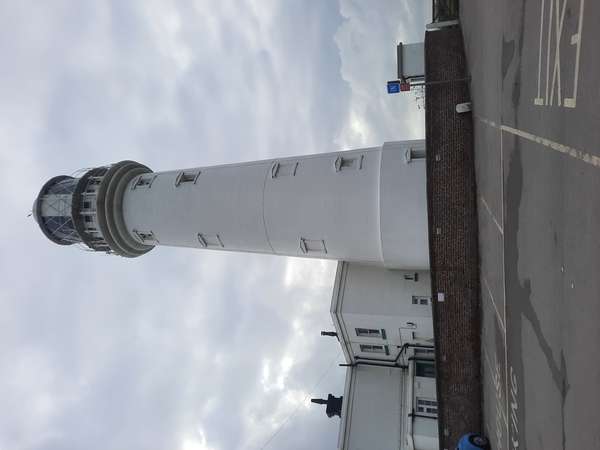
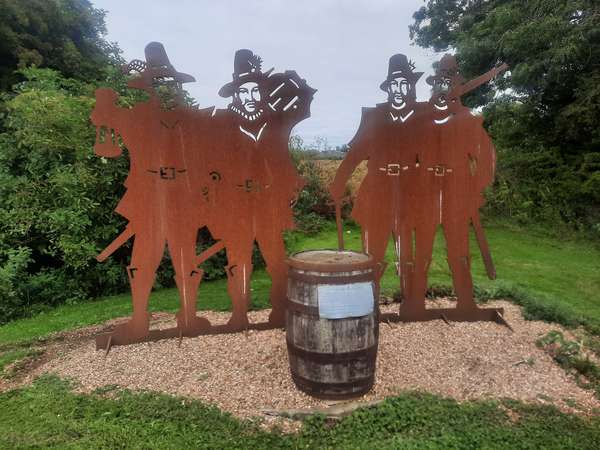
Bridlington to Beverley. Overcast but thankfully dry. First to Flamborough Head, then clipping the Yorkshire Wolds before a long ride southwards through the agricultural flatlands of the East Riding. In many places unharvested wheat had been flattened by yesterday's downpour. Stop for food at Withernsea, and a short stop to find the artwork for gunpowder plotters John and Christopher Wright. Turned westwards through part of Hull and finally to Beverley.
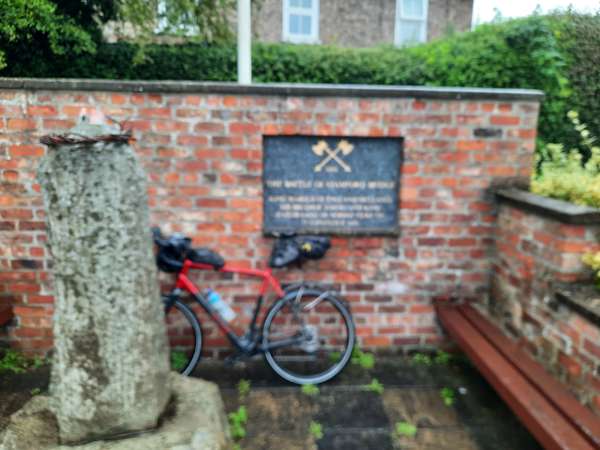
York to Bridlington. Rain. A lot of it. First to Stamford Bridge – if Harold Godwinson had lost that battle in 1066, would we be speaking Norse rather than semi-French? Kanskje.
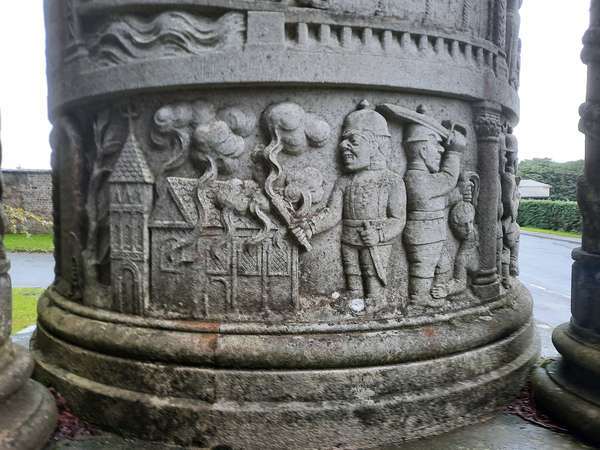
Over the Yorkshire Wolds in heavy rain, gratefully stopping at the café at Sledmere House. I confess that if I had passed anywhere near a railway station, I would have abandoned and sneaked home; this was most definitely Rainer Newberry’s category Type 2 Fun. Brief look at the strange WW1 Waggoner’s memorial, before continuing onward to Bridlington: the sea churned brown by the strong north-east wind.


Made in the Cotswolds. Published by Éditions Système D Ltd.
Log in with your cycle.travel account:
| Password |
Or simply use your account on:
