
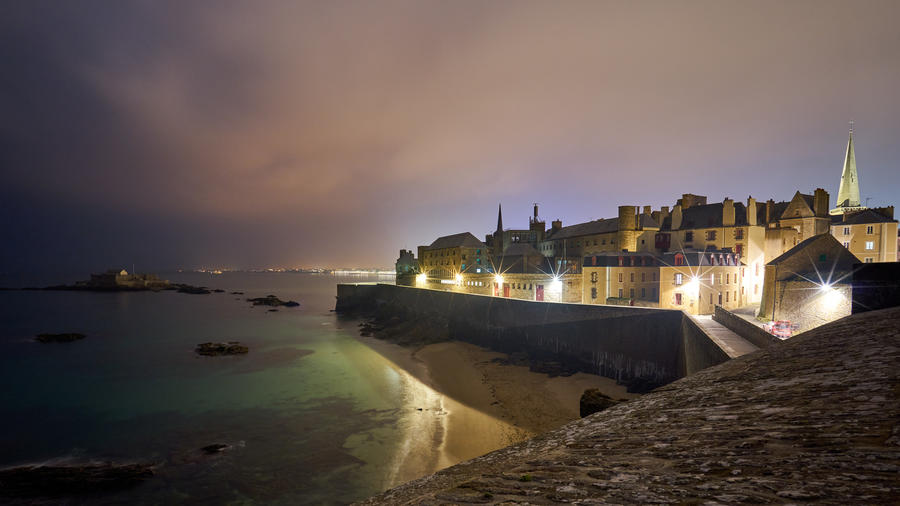
Saint Malo You couldn’t wish for a better start to your ride than Saint Malo, the historic port town where Brittany Ferries’ ships from Portsmouth and Poole dock. Though it’s quite a sprawling settlement these days, the main tourist interest is in the historic Ville Intra-Muros (“within the walls”), where crepes and local cider are pretty much compulsory. You may be eager to set off after 11 hours on a ferry, but even then, don’t pass up the chance for a short detour through the old town.
The peninsula is full of good riding. We’ve chosen to follow EuroVelo route 4 for ease of route-finding and because it neatly combines quiet country roads and coastal riding, but you can stick to the coast more faithfully if you like. In particular, consider the 4 mile/6km detour to the oyster fishing village of Cancale, whose seafront couldn’t be much more photogenic.
An easy cycle path runs alongside the D 155 through the seaside villages of Saint Benoît des Ondes (“of the waves”) and Le Vivier sur Mer. The sea itself is some way distant across the marshes, but it’s pleasant, relaxed riding as far as Cherrueix – as long as the Breton winds and rains hold off. Then, for a while, you wave goodbye to human habitation as the route sets out through woodland and across isolated farmland on a set of fine gravel tracks. These are easily rideable on any touring bike, but the gravelphobic could divert onto the many tiny tarmac roads that run parallel and have barely any more traffic, or just stick to the D 797 if you want to make fast progress.
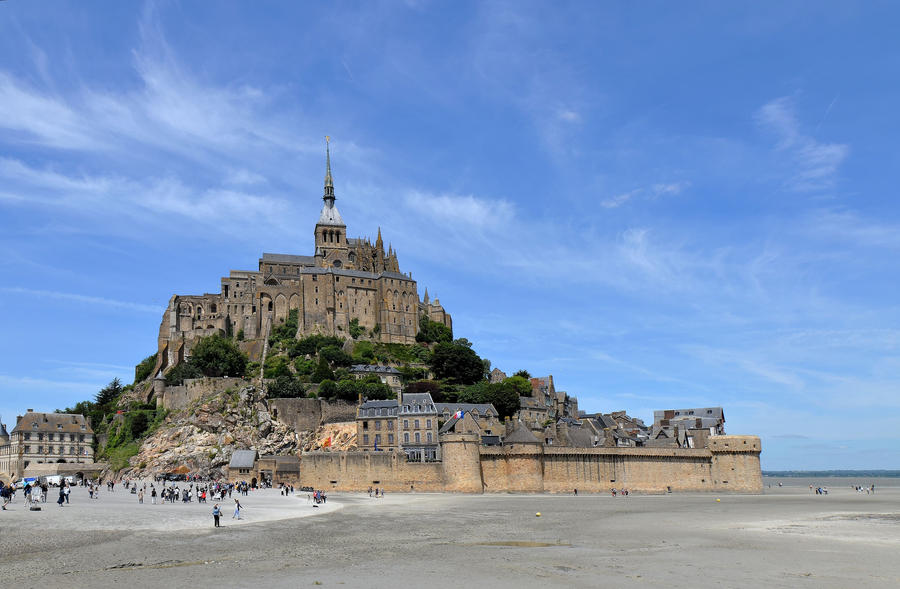
Mont Saint Michel (51km) The magnificent fortified island of Mont Saint Michel is, again, just off the route – but if you’ve not visited before (and it is France’s second biggest tourist draw, so you may well have done), it’s an easy 4mi/7km ride up a good quality cycleway beside the Cuesnon river and then across the tidal causeway. There is bike parking on the island itself, or you may choose to lock up at the barrage and catch the free shuttle bus. Bear in mind that such a touristy area attracts opportunistic thieves and carrying your panniers up the steep slopes of the island may be tiresome.
Pontorson, a short way inland, is the de facto service centre for Mont Saint Michel, an unpretentious but useful town with plenty of crêperies, supermarkets and a railway station. Follow the signs past the railway to the start of the rail trail that will take us all the way to Fougères, 28mi/45km distant. As far as Antrain this is actually an asphalt road where cars are permitted, but traffic is so light it’s barely distinguishable from a car-free cycleway.
Antrain is a sleepy, pretty village just off the route (and up a climb!). From here it’s bikes and pedestrians only, with a fine gravel surface of the sort typical of many French rural cycleways. Look out for old station buildings along the way. The tree-lined route is blissfully quiet, and though there’s a steady 1% gradient up to Saint Brice en Coglès it’s barely noticeable. There’s a brief diversion onto minor roads to avoid an autoroute junction before the final gentle descent into Fougères.
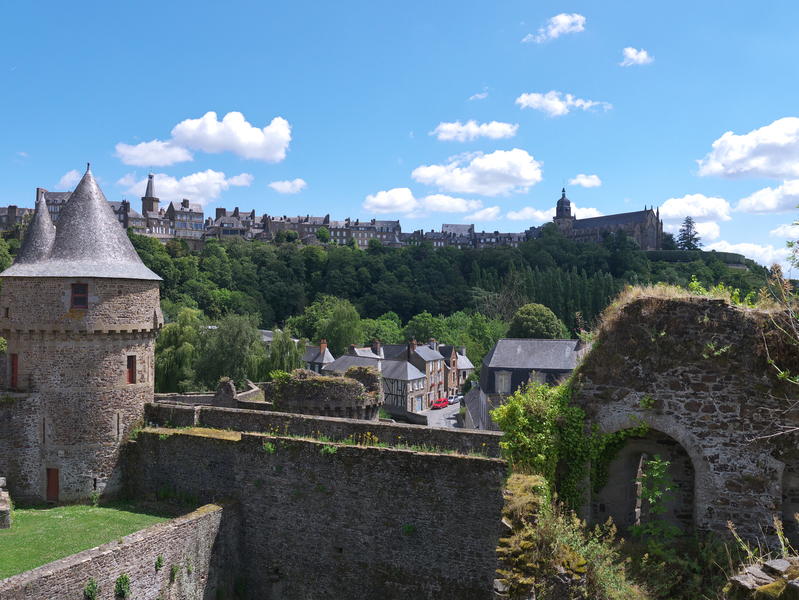
Fougères (97km) From the cycle route, Fougères is easy to miss. The railway passed under the town centre in a tunnel and a deep cutting, both of which were impressively restored in 2018 to allow the cycleway to pass through. But do venture off-piste here. The town centre with its well-tended streets, half-timbered houses and independent shops would be enough of a draw in itself, but Fougères’ main claim to fame is the fabulous moated castle, said to be “the largest medieval fortress in Europe”. Dating in parts back to the 12th century, it has somehow managed to escape being damaged in the various wars of the last 900 years, with 13 intact towers glowering over the town from above.
(One of the occupational hazards of writing up a route guide is that the fabulous discovery you once made may not last forever, or indeed very long at all… and sadly that’s true of the Fougères restaurant where your scribe enjoyed an exceptional meal. Sorry. Still, there’s no shortage of places to eat, particularly on the Place du Théâtre and around the castle.)
The railway path continues south from here. You’re not going to be able to cross France without the occasional hill, though, and the first is a short sharp climb into the little village of Luitré, where you leave the cycleway – and Brittany. From here it’s a succession of quiet, gently undulating roads on a fairly direct south-easterly course towards Laval, linking a succession of villages each with the obligatory mairie, boulangerie, bar and church. The first, Juvigny, is a proud village fleuri (flower village), winning the coveted ‘Golden Flower’ award in 2008.
The last few kilometres into Laval see the route carefully dodge main road, motorway and railway until we pick up the Vélo Francette cycle route alongside the river Mayenne.
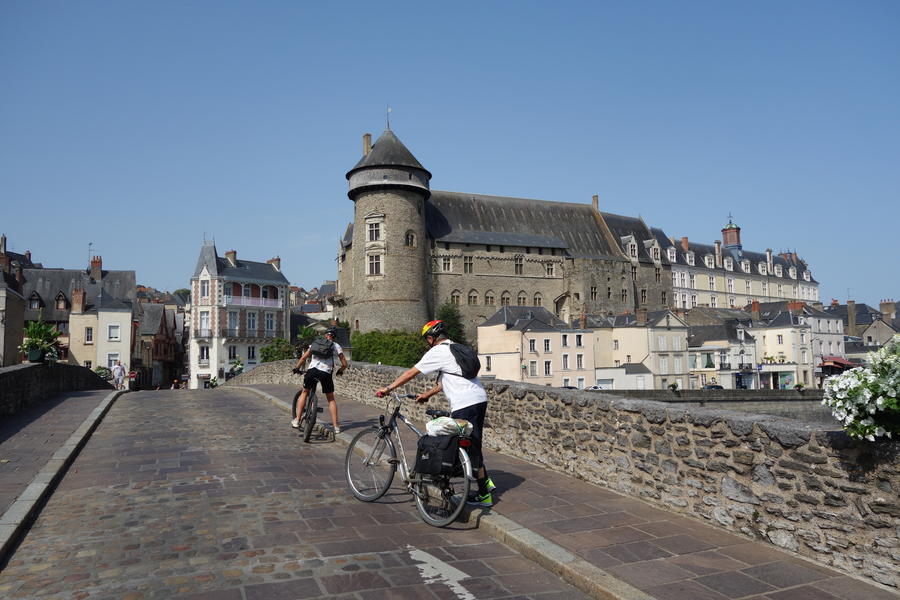
Laval (149km) That’s the last climbing you’ll do for almost 200 miles. From Laval, the route follows three great rivers – the Mayenne, the Loire and the Vienne – on towpaths and quiet valley roads. Flat needn’t mean boring, and Laval itself, a mix of medieval and 19th century architecture, is the first of many worthwhile riverside towns. The best of it is around the château and Place de la Tremoille, on the west bank of the Mayenne. And although the towpath is level, the valley sides are steep, as you’ll notice not just in Laval but to the south as the river winds gently onwards; it’s typically some 40m from river level to the roads above.
The surface is once again fine gravel. The locks have toilets and water taps, invaluable on a hot day, and even a lockside café at La Benatre. Here and occasionally glimpse elsewhere, you’ll glimpse châteaux on the hills above. But the finest buildings are the old mills by each lock, sometimes carefully restored with a wooden waterwheel, sometimes unoccupied and tumbledown.
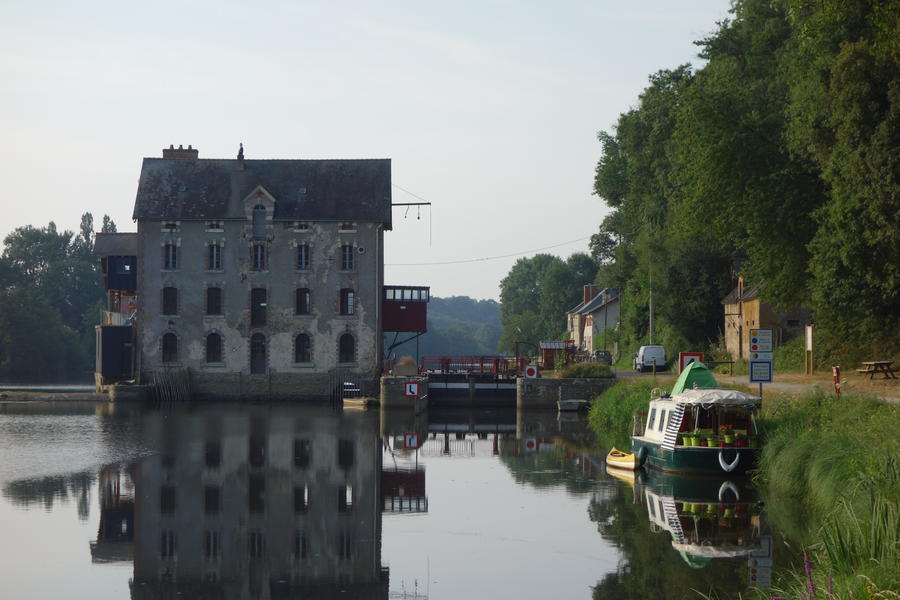
Château Gontier (184km) The one thing Château Gontier doesn’t have is a château. Gardens, an art & history museum, a maze of narrow streets, yes. But no château – that long, imposing building you see on the riverfront is actually a hospital. It’s one of those provincial French towns that’s never going to merit a guidebook chapter of its own, but gives you more of an insight into the character of this very agricultural area than ticking off the sights ever will.
Continuing south on the towpath, the riverside villages – Ménil, Daon, Montreuil – are all remarkably quiet, so don’t bet on getting lunch anywhere. The little market town of Le Lion d’Angers, 1.3mi/2km off the route, has a world-class racecourse on the peninsula formed by the Mayenne and its tributary the Oudon.
More interesting, though, is the island formed by the Mayenne, the Sarthe and the old course of the Mayenne (the ‘Vieille Maine’) just upstream of Angers. The Île Saint-Aubin has no roads and no houses, just an expanse of wetlands and meadows. Access is by a ferry across the Mayenne shortly before entering the city. Nearby is Terra Botanica, Europe’s first ‘plant zoo’.
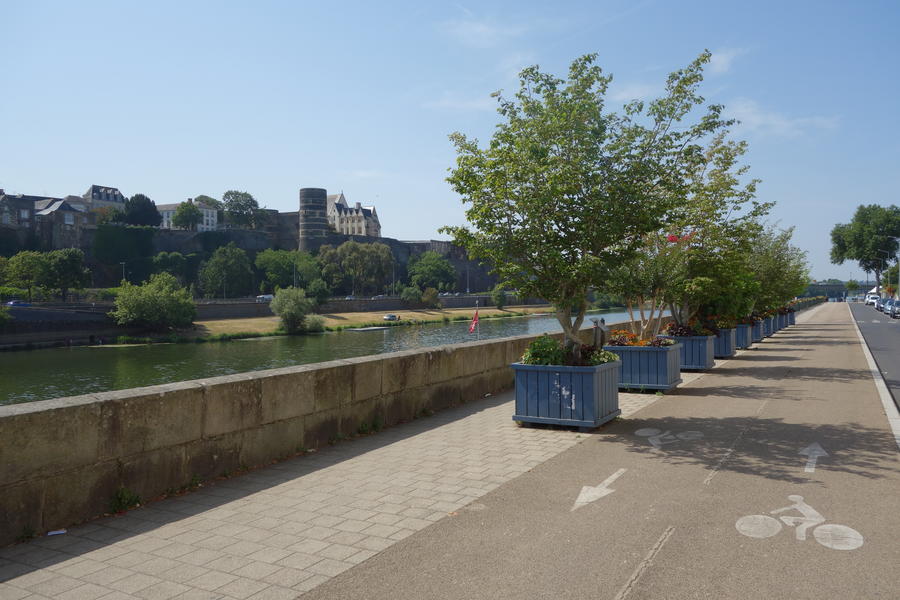
Angers (241km) Angers has much to see and could easily occupy a day of your stay. It is, inevitably, clustered around another mighty château, but the city has much more: a fine cathedral, the outstanding Musée des Beaux Arts, countless restaurants and cafés. It’s one of those places which is much easier to explore on foot than by bike, not least thanks to the steep climb up from the river. That aside, the city centre is surprisingly compact, so you can lock your bike up at the hotel and then spend the evening walking around.
The confluence of the Maine (as the Mayenne is known here) with the Loire is a few kilometres downstream. To join the Loire, you can continue following the towpath to the bridge at Bouchemaine, or take a winding suburban route through parkland to the east. We’ve plotted out a simple middle course which gets you to the Loire at Les Ponts de Cé with minimum fuss.
This is a valley route, not a towpath route, so you won’t see much of the river at first. Indeed, upstream of Angers, the wide, shallow expanses of the Loire were never convincingly navigable for horse-drawn boats. The first few kilometres follow pancake-flat farm roads, but at Saint Mathurin you finally draw close to the river, crossing it on a utilitarian girder bridge. From here, the riverside roads are genuinely lovely, and (in summer months) busier with bikes than cars on this most popular of véloroutes.
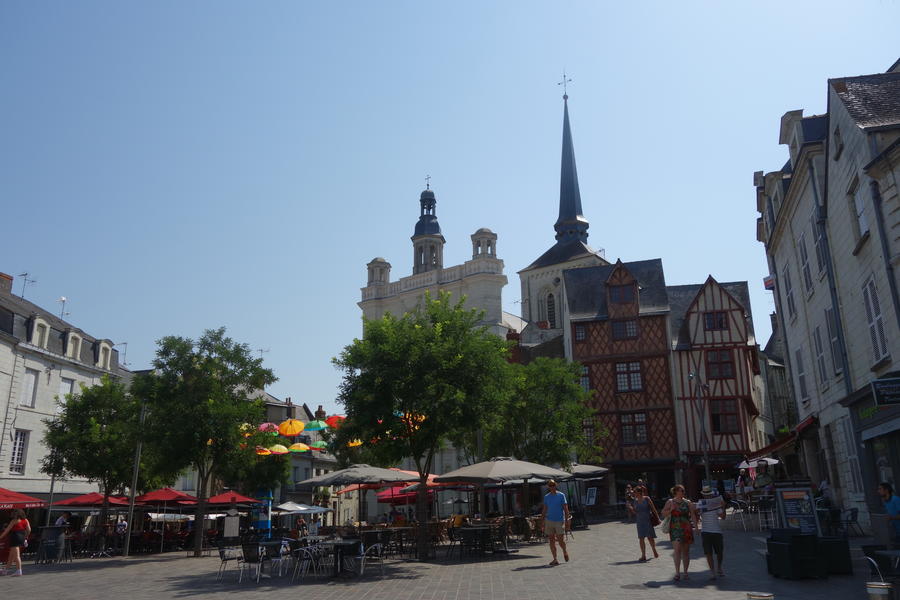
Saumur (295km) This whole route would work as a wine-tasting tour of France, and Saumur is one of the strongholds of Loire valley wine – particularly sparkling wine, unusual for the area. Stone was dug from riverside cliffs, with the hollows then turned into wine cellars. This creamy white tuffeau limestone gives the town a distinct architectural character, seen to best effect in the shopping streets close to the market and church on the south bank. There’s an (inhabited) island in the Loire here, but it’s not particularly interesting for the visitor other than the campsite at the far end.
This wine-producing region is much in evidence as you head upstream, not just for the vineyards themselves, but also the restaurants that proudly boast of their local wine lists, and, of course, the famous Loire châteaux where the finest wines have been served for hundreds of years.
The Loire cycle route is not so much one single linear route as a collection of braids, and though our plotted route stays close to the river, you can venture inland a little for a chance to cycle among vines on quiet local roads. (Follow the alternative V22 route if this interests you.) Similarly, the châteaux of the Loire and its tributaries are too numerous for any single cycle route to pass them all. Should you feel like an architectural detour, the former monastery at Fontevraud l’Abbaye is the stand-out contender, a colossal complex dating back to the 12th century; it’s now a modern art museum as well as an attraction in itself.
At Candes Saint Martin we leave the Loire to follow its tributary the Vienne upstream. Chinon is a contender for the finest town en route since Saint Malo or Fougères. It’s laid out in three long streets running parallel to the river, each one higher than the other in this hillside town. At the top is the Royal Fortress, recently restored and in its castle-like design much more imposing than any Loire château. It’s a steep climb from the river, but worth it for the panoramic views alone.
Three parallel roads run along the north bank of the valley to L’Île Bouchard. We’ve chosen the D 21 for château points, but you can take the D 8 by the river, or the little road between them through vineyards. After crossing the Vienne at L’Île, it’s an easy, flat run down the valley, soon picking up EuroVelo 3 signs and with few turns to slow your progress.
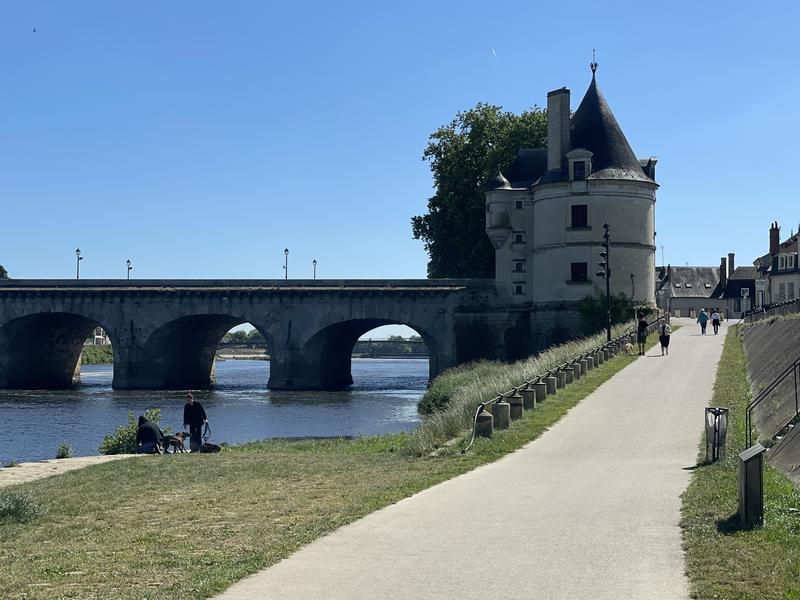
Châtellerault (388km) Over the fine 17th century bridge (the oldest on the Vienne), Châtellerault is just the right side of scruffy. There are more long-closed shop units than open ones, it seems, but hidden among them are a handful of crêperies, bars, minimarkets – everything you need in an overnight stop.
Heading out of town on suburban roads, briefly ignore the EuroVelo signs pointing you along an unpaved track under the main road bridge, and just follow the traffic over the roundabout instead. The route follows the valley on quiet roads, some distance from the river. The queues for the boulangerie at Bonneuil, 20km on, were snaking out into the village square which proved to be an excellent sign.
Chauvigny (423km) Most of Chauvigny is on the opposite bank from the EuroVelo route, but if you have the time, do take the opportunity to explore. Its main draw is the impressively higgledy-piggledy medieval city on the hilltop, with two fine churches and the remains of five castles. (And yes, it does involve a climb to get there.) Bloomsbury artist Roger Fry explored this area by bike before World War I, and his famous painting captures the hillside town.
As if to bring you back down to earth, the next landmark is a nuclear power station at Civaux, but that does at least come with the bonus of a traffic-free cycleway. Note the fine timber-framed inn by the bridge to Lussac. There are a few more climbs as the route crosses to the opposite bank at Gouex – though keep your eyes peeled for remains of the old railway which is walkable but sadly not (yet?) cyclable.
A short burst on a busy road takes you through L’Isle-Jourdain, a small town of no great remark other than a useful Intermarché supermarket. Here, the hills start for the first time since Laval – hardly Alps, but a few bursts enough to tax your legs, with properly exhilarating short descents down to the river, dammed here into a rather pretty lake. But Saint Germain de Confolens is where you’ll get the camera out, an impossibly pretty hamlet nestling under a 14th century hillside castle. (The church is some 200 years older still.)
Confolens (497km) Confolens has been well and truly ‘discovered’, but is none the worse for it. You’ll hear English spoken at every restaurant and bar, particularly overlooking the fine marketplace. There’s even a Pukka Pies sign at the chip shop. It’s still unmistakably French with a 14th century bridge, winding streets, an eccentric general stores, and a friendly campsite for the cycle tourist. We can understand why so many expats make it their home.
Still following EuroVelo 3, this is a stage of undulating lanes where cars are rare and villages infrequent. There’s a handy grocery at Exideuil by the railway line, currently closed and scheduled for reopening by 2030 – though you can’t help but worry for its fortunes given the enormous new N 141 road, which crosses a few km further on.
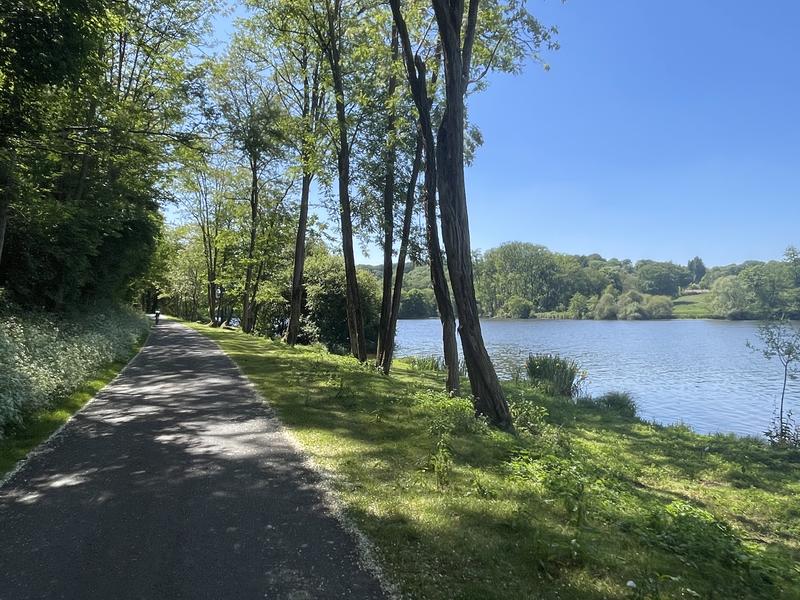
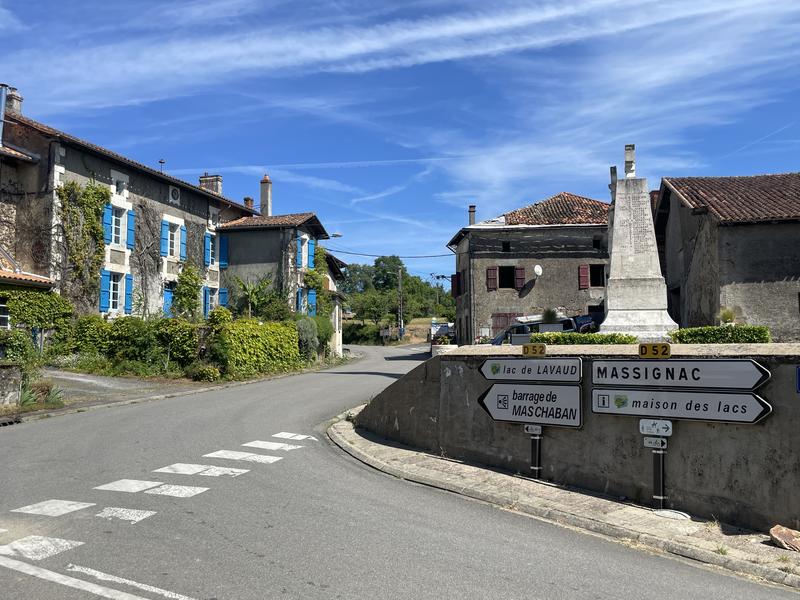
Transport politics aside, our place is on the back roads, and the EuroVelo route does a fine job of selecting them. The hills after Exideuil form the watershed between the Vienne and Charente valleys. The headwaters of the latter have been dammed into two wildlife-rich lakes which the route curves gently around. Massignac, with its community café (Chez Alice) and auberge, heralds a slightly quieter section as we spend our last few km on EV 3.
Then there’s a precipitous descent on a tiny, grass-centre lane to the Tardoire valley, as we strike out on little-ridden lanes away from the EuroVelo itinerary. It gets markedly hillier here, but the steak frites at Busserolles’ village bistro is enough to revive tired legs. The lake at Saint Estephe, a few hills further on, is popular with day-trippers and has both campsite and restaurant. A fast, enjoyable descent takes you into Nontron.
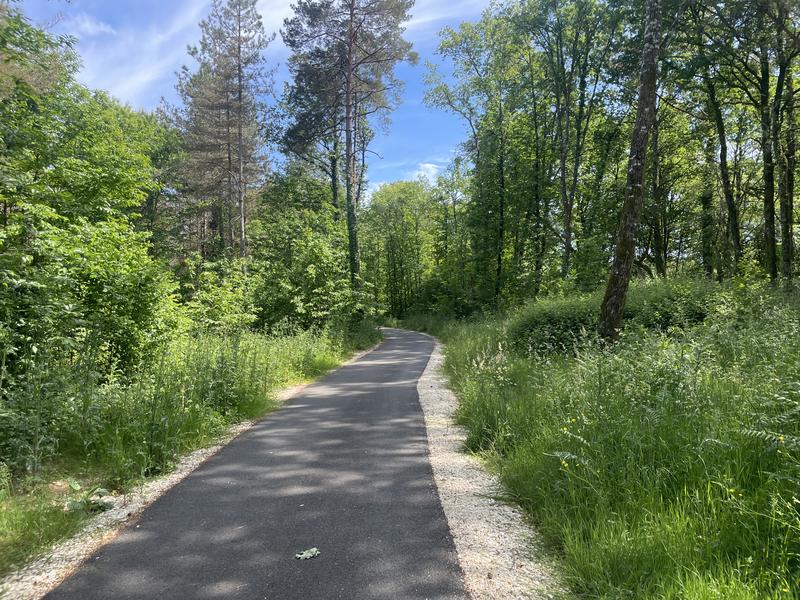
Nontron (567km) The quiet, bypassed town of Nontron sits beside the steep-sided Bandiat valley. But (photographic potential aside) you don’t have to worry about that, because here the route picks up another newly built cycleway on a former railway line. Part of the Flow Vélo route along the Charente and its tributaries, this is (at first) buttery smooth asphalt winding through the hilly, forested countryside of the Périgord Vert – officially part of the Dordogne département but much less visited than the celebrated southern part. Look out for railway remains like station buildings, elegant arched overbridges, and the modern interpretation panels with pictures of the railwaymen who once worked this rural route.
After Saint Pardoux the paved cycleway gives way to a reasonable gravel surface with the occasional bump, but nothing to worry any touring bike. The gradient is a little more noticeable here, but nothing in comparison to the short final section on rural roads, taking you up a brutal short climb to the elevated town of Thiviers. Still, there’ll be more smooth cycleways later in the journey…
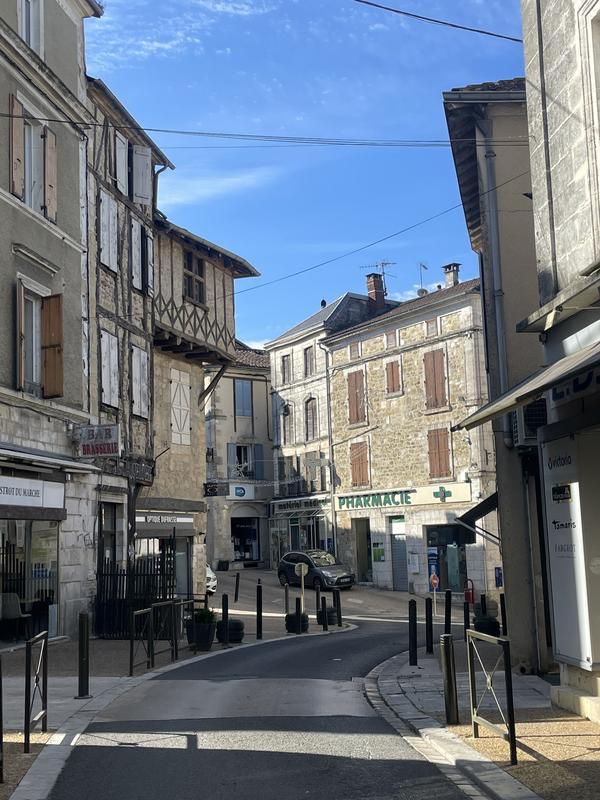
Thiviers (595km) Thiviers is a small-scale gastronomic enclave, France’s capital of foie gras and a long-standing centre for truffle traders. (The truffle markets only take place in the winter months, when we presume no one would be so daft as to ride this route.) Venture down the narrow alleys with their overhanging timber-framed upper floors for more prosaic cycling food such as pizza.
One of those pesky velorails has nabbed the trackbed out of Thiviers, which means (quiet) road riding once more. Excideuil, described by the Guardian as “a confident little market town… Périgueux in miniature”, perches beside the Loue valley, its sloping square overlooked by a sturdy church with an ornate-topped tower. We’ve been following the V92 Flow Vélo route for a while, but after topping the climb out of Excideuil, veer off-route for an excursion to Hautefort.
Accommodation is not plentiful around Thiviers and we’d suggest booking in advance if you plan to stay here.
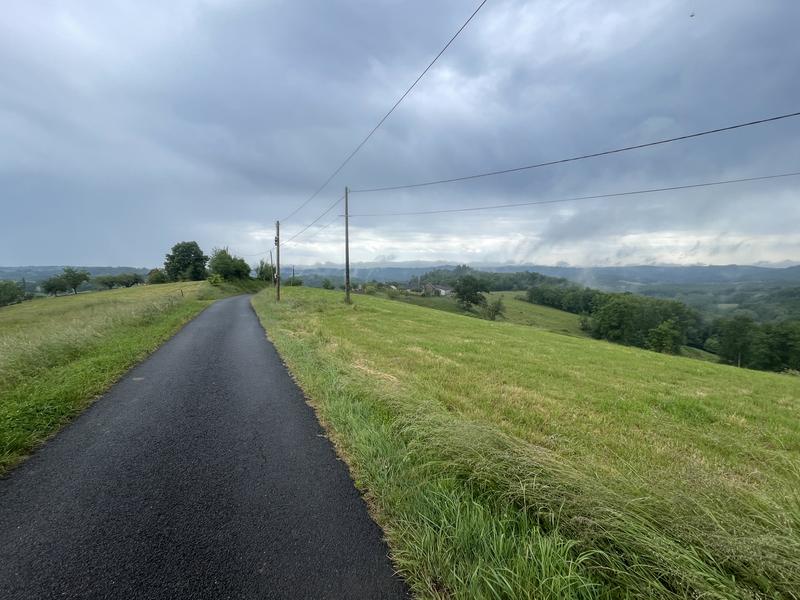
Hautefort (629km) Hautefort’s château – 10th century in origin, but entirely reconstructed in the 17th century – and associated landscape gardens are a major tourist draw. Even if châteaux aren’t your thing, this is an excellent lunch stop before plunging back into the most rural countryside.
The country lanes that meander vaguely south-east from here are perhaps the finest encountered so far. Undulating but rarely hilly, almost entirely without traffic, and for a brief, glorious section around Teillots, following a dramatic ridge as the land drops sharply down on either side.
A long, enjoyable descent leads to Villac and the narrow, steep-sided Elle valley. There’s interesting transport architecture all around – an old rail viaduct here, a towering motorway bridge there – but the most fun one is hidden away. Just after the motorway, turn left, pretending you didn’t see the ‘no vehicles’ sign. The road picks up the distinctive course of a former railway… which unexpectedly vanishes into a narrow tunnel. Put your front lights on full and keep going!
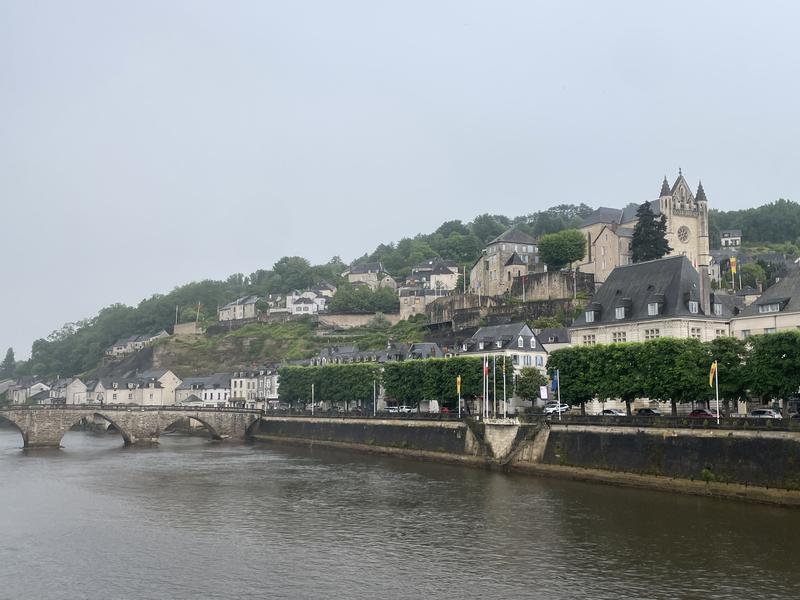
Terrasson Lavilledieu (656km) The route meets the Vézère valley just downstream of Terrasson-Lavilledieu – a rather ordinary (and very congested) town on its north bank, but much more attractive on the medieval south bank. Our mapped route skirts past it, but it’s not much extra distance should you want a lunchtime or sight-seeing stop.
Crossing the Vézère at Condat, the V92 route officially follows a mixture of sand/gravel farm tracks slowly up the Coly valley, but the main road (D 62/D 64) is not too busy and makes for simple, stress-free cycling. Your call, but we don’t think you’ll miss much by following the road.
At the pretty medieval village of Saint Geniès, leave the road and rejoin the V92. Some of this next stretch is on minor roads; some is on an old railway; and some, counter-intuitively, is both at the same time. There’s an unavoidable tough climb before Sarlat, but the V92 route chooses the quietest and most attractive entrance to the town.
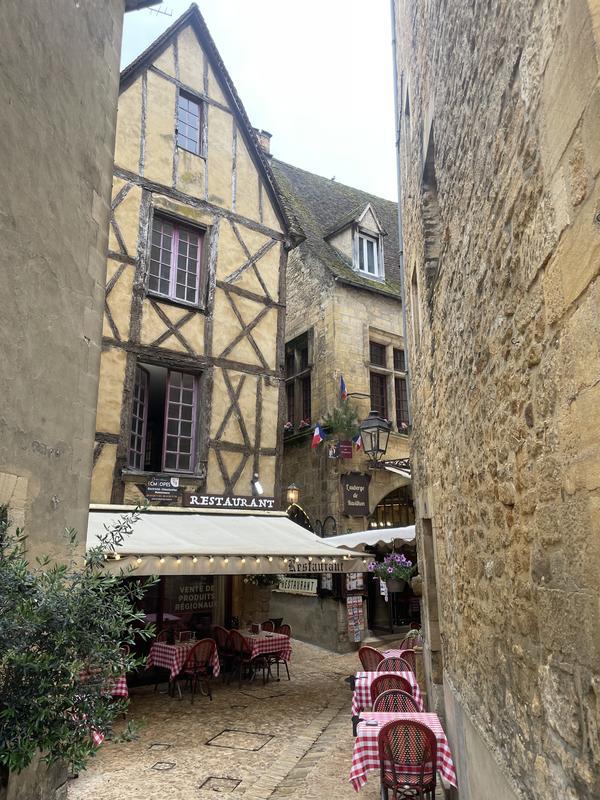
Sarlat la Canéda (694km) Sarlat is one of those places where even a bicycle feels like a modern intruder. This astonishingly well preserved 15th/16th century town has been deservedly shortlisted as a World Heritage Site. The centre is compact but warren-like: it’s easy to get enjoyably lost among the snaking passages and narrow streets, knowing that around the corner you might just find the best restaurant in town. (In our case, it was a very welcome cassoulet.) Accommodation is plentiful, so do choose this for an overnight stop.
The route out of town is less inspiring, but after a couple of km a smooth asphalt cycleway takes over, once again converted from a former railway. Carsac is a suitable stop for your morning croissant: when we passed, a major pétanque tournament was just getting underway. When the old railway splits, our route takes the southbound tracks crossing the Dordogne, via an impressive viaduct with a mêlée of canoes below.
Although the rail trail doesn’t last much longer, the quiet roads that form the (signposted) Céou valley cycle route are barely any busier. The caves at Cougnac, just 1km off the route, have 30,000 year old rock paintings: a visit takes around one hour and can be booked in advance. Back on the road, the slow, gentle ascent eventually steepens on the Chemin de Mont Margis until a final kick – absolutely no shame in pushing! – carries it up to the hilltop town of Gourdon.
Gourdon (720km) The medieval town of Gourdon is as classic a hilltop settlement as you could ask for. From the boulevards encircling the citadel, stone archways lead to narrow, steep streets – too steep to ride, but not to push. It’s topped by the church of St Peter and ruined castle, from where you can see for miles over the surrounding countryside. Head to the market place on the eastern edge of town for cafés and shops.
The D 12 is a fairly quiet, easy two-lane road following the looping Céou valley and the none-more-rural railway line. After a while, there’s a chance to dive onto some delightful smaller lanes to the pretty village of Saint Germain du Bel Air and its ostentatious hotel de ville.
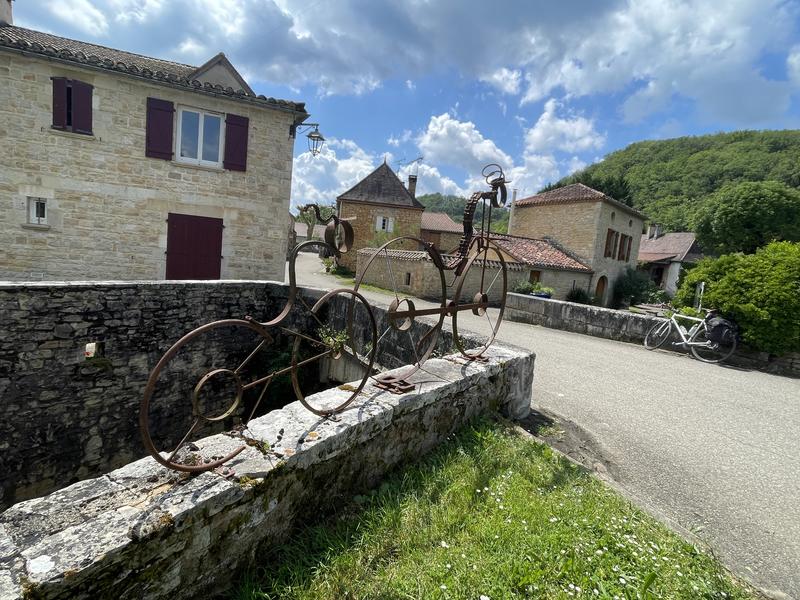
Here we leave the Céou and climb steadily through the heavily wooded Bouriane to the highest point of the route to date, some 370m. The reward is a fabulously fast descent to Gigouzac, an impossibly scenic village with a 12th century church, bicycle sculptures, and a bistro making good use of the local speciality, chestnuts. A shorter climb leads to a much twistier descent into the village of Brouelles: there are two roads through the village, but we’ve chosen the one which passes ‘Brouelles station’ and its Platform 9 3/4. (There is no railway here.)
There is a railway, however, at Calamane, crossing the valley on an impressive viaduct. From here we carry on down to the Lot at Mercuès. A cycle path takes you safely along the first 1.5km, and will eventually reach all the way to Cahors – but for now, the remaining 3.5km require cycling the unpleasantly busy main road along the valley, the D 811. There’s a narrow but passable shoulder for most of the way: put your rear light on and wear hi-vis if you have it. Once over the roundabout, there’s a painted cycle lane for a safer, if rather workaday, entrance into Cahors.
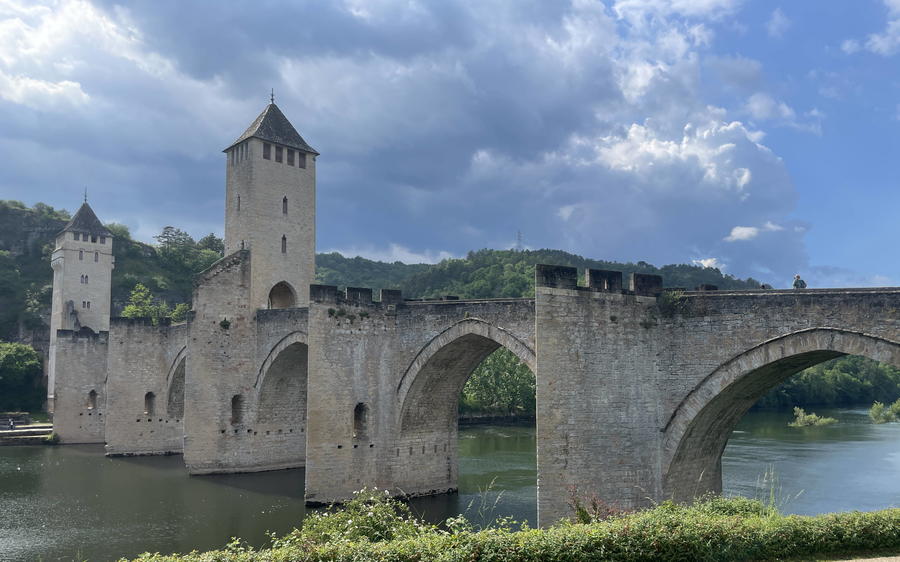
Cahors (770km) Welcome to the Lot, your companion for the next 200km of fabulous riding – never less than scenic, sometimes outrageously so.
The valley ride starts here in Cahors, the capital of the Lot and a tourist destination in its own right. The 14th century fortified bridge, Pont Valentré, is Cahors’ most photographed landmark. It took 70 years to build, and reputedly was only finished thanks to a pact with the Devil. But the old town, east of the Boulevard Leon Gambetta, is remarkable enough in its own right, a warren of medieval streets connecting a clutch of town squares. The Saturday market has taken place outside the 12th century cathedral since the Middle Ages, and is reason enough to choose a self-catering apartment if you’re staying overnight here.
Until 1980, passenger trains ran along the Lot valley. The railway had a second life as a tourist line, but that ended in 2003. Since then, the rails have slowly rusted away and the trackbed has become overgrown. But not for much longer. The 80km route from Cahors to Capdenac has been earmarked as a voie verte for cyclists and walkers. The first 8km, as far as Arcambal, opened in 2025. The next 72km still awaits redevelopment, but you’ll see its elegant river bridges, tall tunnels and swooping curves as you follow the lanes up the Lot valley.
As with any significant valley, the Lot valley floor has been colonised by a series of moderately busy roads. The official signposted cycle route (V86) takes a traffic-averse attitude, which sometimes means swinging away from the valley on quiet but hilly roads. We’ve taken a slightly more balanced approach, following the V86 where possible but occasionally resorting to the main road to save climbing and see more of the Lot.
So, at Arcambal, we have the choice of a backroads route away from the river, or following the valley. We choose the latter, first on little lanes with high rock sides, then descending to the D 662 at Vers. (Be careful to take the right turn here, ignoring the V87 cycle route signs.)
The D road isn’t that busy, and the rock overhangs make it worthwhile. The viaducts and tunnels of the old railway are much in evidence. At the tourist hotspot of Bouziès, cross on the bridge, stop for an ice-cream, and begin the climb up to the stunning balcony road.
(As an alternative here, you can follow the unsurfaced old towpath along the riverbank from Bouziès. You’ll need to get off and push at times, and that’s the appeal: it’s cut into the rock, a low-headroom walkway once used by horses to pull boats up-river. It leads to a minor road; turn right after 1km for the steep hairpins up to Saint Cirq.)
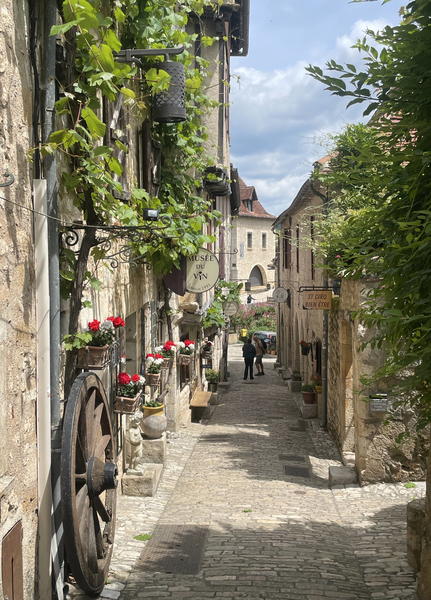
Saint Cirq Lapopie (803km) Saint Cirq is on the list of The Most Beautiful Villages in France. It has a good claim to the title of the most beautiful. Ok, it is touristy. Ok, the village restaurants are not going to give you the best meal of your life. But you can’t but melt at this miraculous assemblage of stone streets, ruined castle, stone cottages and timber-framed tops, all perched impossibly high on the hillside. The village centre is fully pedestrianised, so lock your bike up by the roadside and enjoy exploring.
A rapid descent takes you back down to the Lot and little riverside roads along the southern bank, justly popular with cyclists. Eventually we cross into the friendly, bustling town of Cajarc. The restaurants and shops are all on a boulevard encircling the old town, but step inside the walls and it’s another story – a valley-floor companion piece to Saint Cirq.
The D 662 is quiet from here, competing for space on the riverside with the old railway. At Larroque and Saint Pierre Toirac, with their medieval church and château, we cross onto the south bank again. The wildly looping river here makes for a slightly hillier entrance to Capdenac.
Capdenac (856km) Capdenac Gare is the working town on the south bank of the river, a little rundown perhaps but with restaurants, a supermarket and a bike repair co-operative. Capdenac itself is a tiny hilltop settlement on the north bank with magnificent valley views, another of Les Plus Beaux Villages de France. (Again, to visit, lock your bike by the roadside and walk up the steep pathway.)
The official V86 route dodges Capdenac entirely, heading via the narrow Diege valley before ascending through Asprières to return to the Lot at Bouillac. Alternatively, the D 840 along the Lot is busy, but feels safe enough and cuts out 200m of climbing. Your call! They rejoin at Bouillac, where the old lock house has been colonised by an impressive dynasty of feral cats.
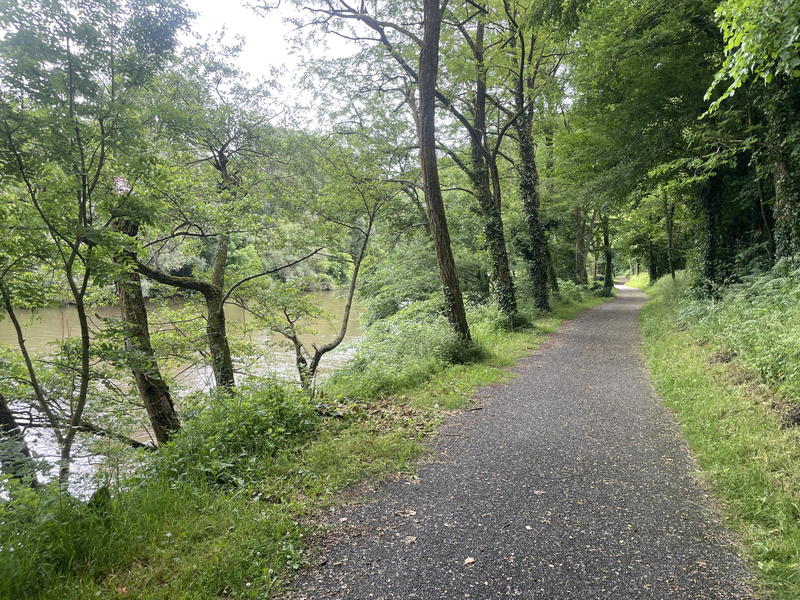
Tree-lined narrow lanes continue close to the river here, practically if not formally traffic-free. You pass one attractive village after another: Livinhac, Flagnac, Saint Parthem, Viellevie. Little by little, the valley sides get steeper and rockier, and the tree cover closes in. Although you’re now on the main D road once again, most of the traffic has departed, making for easy, efficient riding.
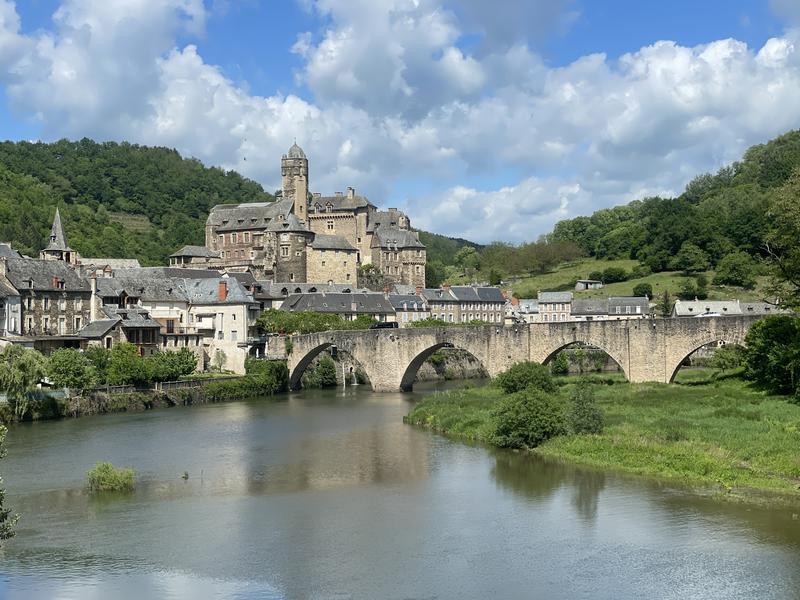
Entraygues sur Truyère (921km) The sleepy town of Entraygues sur Truyère is at the major confluence of the Lot and the Truyère. Once again, you can choose from back-road riding on the V86, or the main road to Estaing. Traffic is moderately heavy on the D 920, but then it does save you 500m of climbing. By now, the valley sides are so steep that it’s practically a gorge, and a hydroelectric plant and dam at Golinhac make good use of this.
Back on minor roads after the pretty village of Estaing, the river widens out once again. Don’t be tempted to skip the detour to the Romanesque church of St Peter with its hidden chamber in the tower, but do just follow the main road into Espalion rather than the signposted route via a rather tiresome gravel path.
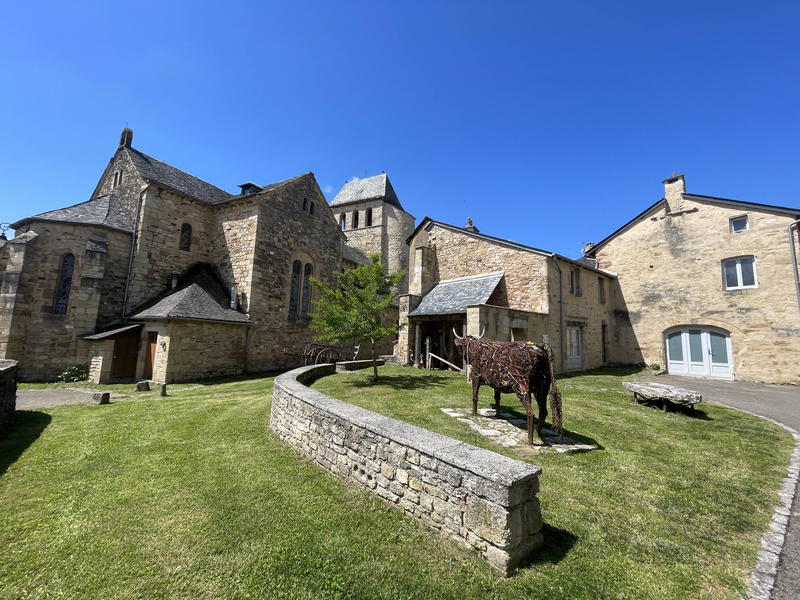
Espalion (945km) Espalion is an unexpected delight, a busy spot on the upper Lot with no single stand-out features but a whole lot of small-town charm. The riverside is particularly attractive, lined by a motley collection of old houses with no two the same colour or height. There’s barely a chain store in the whole place, just independent shops, restaurants and cafés.
We wave farewell to the Lot soon afterwards with a steady, slow climb up to Lassouts. At an isolated three-way junction high on the hillside, the V86 continues towards the upper Lot valley while we plough our own furrow through remote countryside. The tiny hamlet of Galinières is little more than a château, while the 13th century fortified village of Vimenet is well off the tourist trail; both are fine examples of hidden France best discovered by bike. Gently undulating, quiet roads lead to a very brief section of main road entering Sévérac.
Sévérac le Château (989km) Don’t be fooled by Sévérac. The town at the foot of the hill is decidedly ordinary: a station, a supermarket, a bar, some nondescript housing. The château itself, on the other hand, is a frankly bizarre marvel, a combination of squat medieval hilltop fort and grand 18th century baronial manor. Once again, it’s a stiff climb to get there (70m from the main road to the castle), but unless you’re in a hurry it’s absolutely worth it.
Leaving town, the surroundings start unassuming but rapidly get much, much better, with views over wide valleys from gently climbing lanes. A sharp ascent out of Le Tensonnieu takes you onto a tiny road before the undulating D 32 takes over.
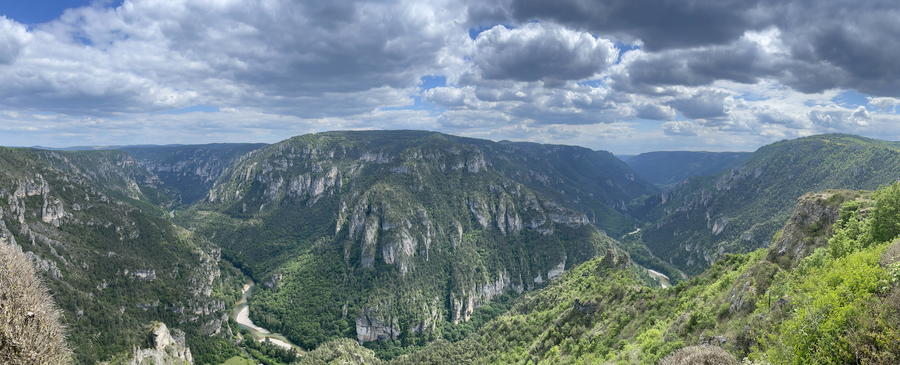
And then comes Point Sublime, which more than lives up to its name. The panoramic views over the Tarn gorge, some 450m below, are genuinely breathtaking. Stop at the café and revel in all the metres you’ve climbed since the Lot – because you’re about to lose them all again.
Not quite yet, though, because there’s an enjoyable ride along the high plateau before the descent begins. The road here is discouraged as a car route to Point Sublime, making it blissfully quiet. The descent starts just before Cauquenas, easy and fast at first, before tightening into a series of sharp bends and hairpins. Enjoy!
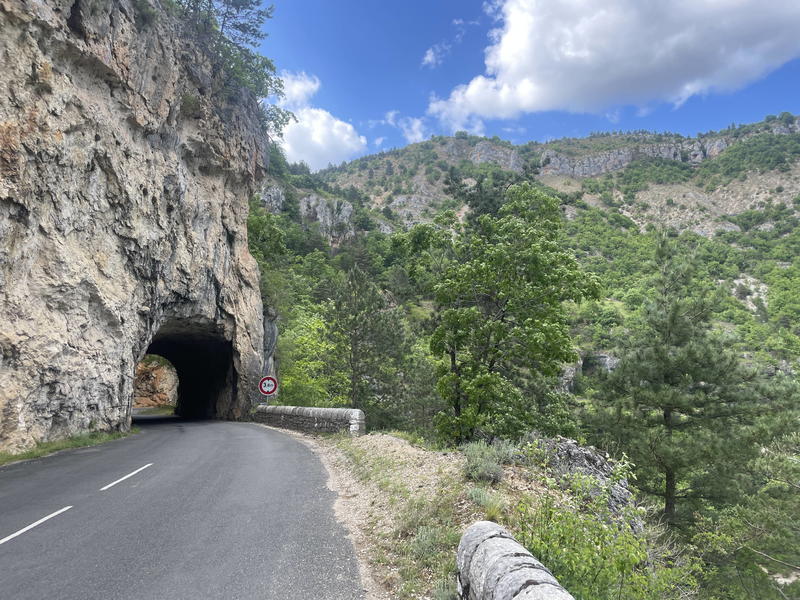
La Malène (1020km) A word of warning – the road along the Tarn valley floor is not as flat as you might expect. The gorge is so narrow that the road has to constantly hunt up and down. We’re heading upstream, so there’s a gradual ascent anyway. So don’t expect to put your head down and make a steady 30 km/h along here.
It is, however, just as scenic as you would expect. Arches and tunnels keep the road close to the valley side. Canoes jostle below on the whitewater river, fed by waterfalls from the plateau. Campsites and chambres d’hôtes cater for a busy tourist trade. Stop every now and then to look back: the views are stunning in both directions.
Sainte-Enimie is the pretty resort village par excellence and a good place to stop for an ice cream on a hot day. La Malène, on the other hand, was in the grip of some epic parish council drama when we passed through, buildings adorned with giant ‘Je suis Olivier…’ placards. (France, never change.) The D road joins the busy N 106 for the last few kilometres into Florac Trois Rivières.
Florac Trois Rivières (1058km) This is a stage of ‘up and over’, following the Tarn high into the hills near its source, then crossing the watershed at the Col de la Croix de Berthel to the Luech valley. At 1088m, the Berthel is the second highest point on our entire route.
First, though, comes our stage town of Florac Trois Rivières. The local hero is Robert Louis Stevenson, whose Travels with a Donkey in the Cevennes brought this wild area to public attention for the first time. Florac is a curious and appealing place, not at all smart but with an artistic heart and a thriving bar culture.
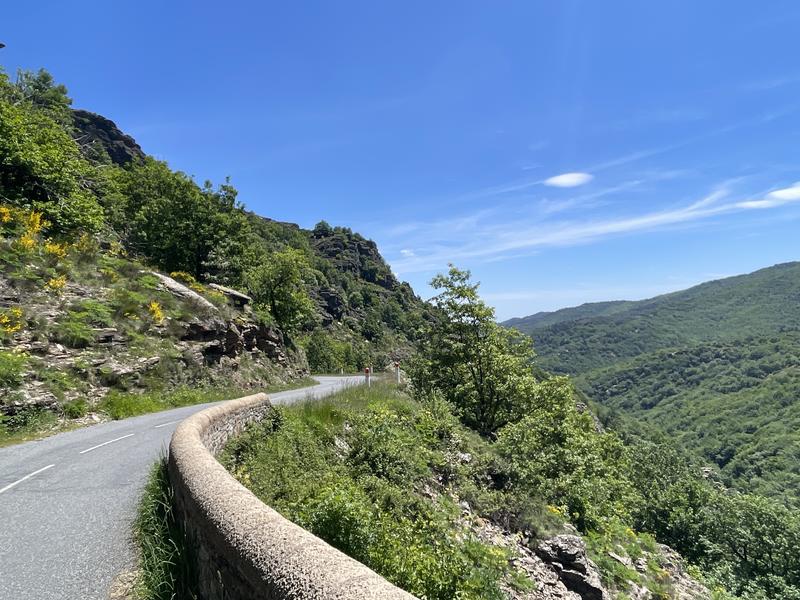
The climb starts immediately as you turn up the valley road from Florac. The infant Tarn is some way below, washing over rocks and plunging over waterfalls. The road clings to the side of the twisting valley, which at times feels like it’s following a secret path through a wooded maze. Just a few kilometres before Le Pont de Montvert it’s a sheer drop down to the river, but by the time you reach the village, somehow the river has drawn level and you can enjoy a beer on the roadside terrace. The remaining climb to the col is gentler, just 2% on average.
From here, it’s almost 40km of glorious descent down to the cycling town of Bessèges. It’s steep, exhilarating and twisty as far as Chamborigaud, popular with cyclists and motorbikers alike. On the way down, tiny little Vialas has a biker-friendly bar, a convenience store, and incongruously, a jazz festival. Chamborigaud’s bistro is rather high-end for the touring cyclist, but the boulangerie does a roaring trade.
The route along the Luech valley to Bessèges follows the quietest of quiet lanes, at one point even ducking through a tiny (2m x 2m) arch in a roadside house. Once again, the road stays high while the river drops rapidly, with some amazing looping promontories for the cyclist to navigate.
(A voie verte is under construction on an old railway trackbed in the next valley to the south, the Mimente. When finished, this will be a fine alternative route, perhaps rejoining at Chamborigaud after crossing the Col la Bégude. For now, however, the N 106 in the Mimente valley is too busy to recommend.)
Bessèges (1121km) After days riding through isolated country in la France profonde, the ex-industrial town of Bessèges comes as something of a shock. Its streets are unmistakenly urban as soon as you enter the city limits, lined by houses with flaking whitewash and rusting ironwork. This was once a town of coal mines, iron foundries, glassworks and steel tube factories. 11,000 people lived here in 1881. Today the number is one quarter of that, but there is real civic pride here, perhaps best shown by the colourful murals around the town. Its 21st century economy is focused around tourism – and cycling! The first race of the French professional season, the Étoile de Bessèges, is staged here every February.
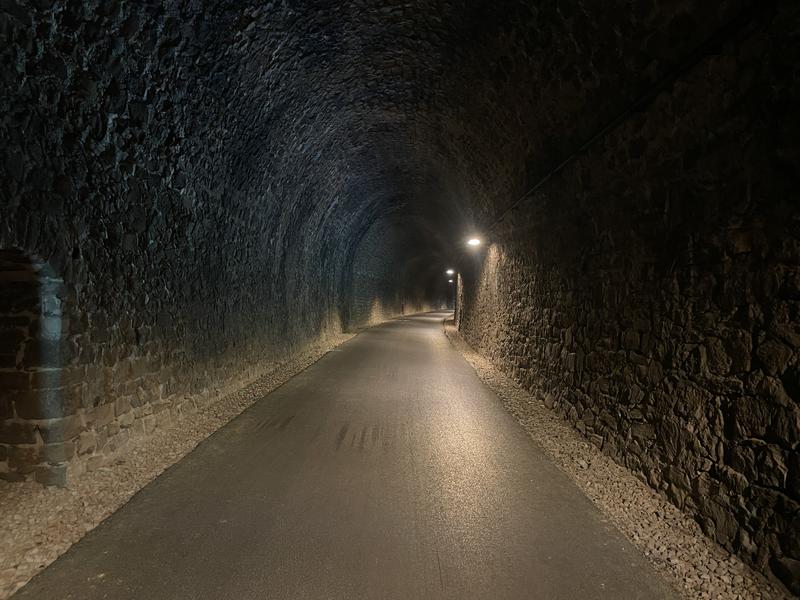
A short ride on moderately busy D roads takes us to the village of Gagnières, where the Via Ardèche begins. A railway through this undulating countryside was always going to be a scenic treat, and this excellent new voie verte repurposes its viaducts, tunnels and cuttings to make for very enjoyable cycling. After a while, the landscape flattens out and we find ourselves in wine country, passing vineyards and the opulent châteaux of their former owners. The surface is mostly fine limestone, good for any touring bike.
Our route takes us to Vallon Pont d’Arc via the fairly busy but mostly level D 579, before peeling off to enter via a quiet country lane.
Alternative route: You can avoid the D 579 by taking the hairpins up to Sampzon, the ‘lighthouse of the Ardèche’. It’s a tough 200m climb to the castle perched on a rock, especially because you immediately dive down to river level again, but the views from the top are remarkable.
Vallon–Pont d’Arc (1160km) Party town, geological marvel, outdoor mecca or foodie paradise? Vallon Pont d’Arc is a split personality of a tourist village, somehow all four of these at once, and you won’t have any problem finding bike-friendly accommodation or a decent evening meal on its pedestrianised streets.
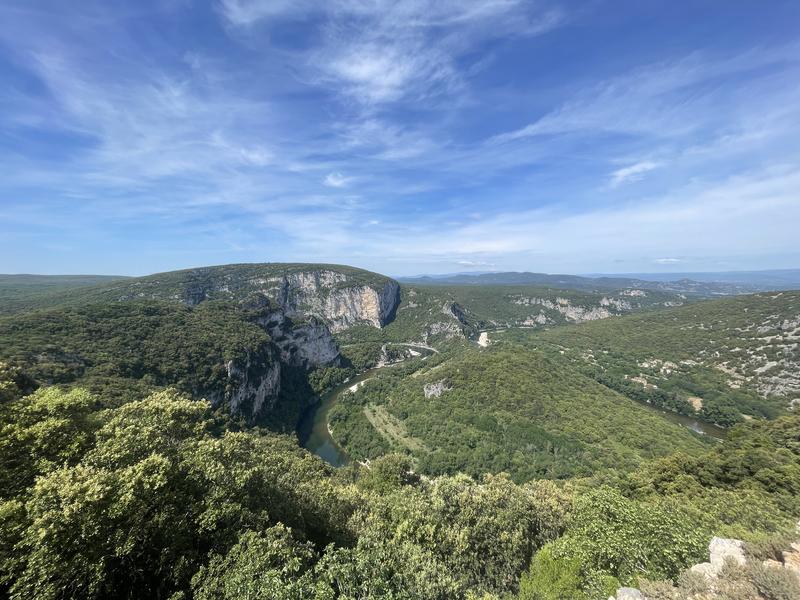
It’s the river Ardèche that attracts the canoeists and the geologists, the latter to see the remarkable Pont d’Arc natural archway a few km upstream and the prehistoric cave paintings nearby. You’ll see all this from the vantage point of the D 290 which follows the Ardèche Gorge. At first the gradients are gentle as you keep the valley floor close to hand, ducking through fabulous tunnels carved directly into the rock.
Then, suddenly, the road turns left and the gradient kicks up, climbing 210m to the Col du Serre de Tourre in just 3km (2mi). The cycle.travel app on your handlebars will show a figure of 9-10% and it’s not wrong. The climb is a breathtaking experience in every sense of the word, with birds wheeling overhead, and low walls (if that) protecting you from a steep drop to the river looping below.
Catch your breath at the viewpoint at the col, inevitably thronged with cyclists, bikers and tourists. Then clip in for your reward: an easy, winding, undulating section where you share the views with wild mountain goats, followed by a fast descent as the plain opens out and the Ardèche becomes much broader. Saint Martin, at the foot of the descent, is another touristy but welcoming village with restaurants and campsites: Aiguèze, on the opposite bank, is much calmer, a medieval village centred around a 14th century fort.
Eschew the main roads and follow lovely tiny lanes through vineyards, passing a 12th century chapel on the way to the quiet wine village of Saint-Paulet-de-Caisson.
Pont Saint Esprit (1209km) The 13th century bridge is Pont Saint Esprit’s main claim to fame. As ever, it’s better seen from the riverbank than from the bridge itself, with a brief detour along the quai. The river is, of course, the Rhône, France’s broadest and a major commercial artery even today. You could cycle the Via Rhôna all the way to the Med (or upstream to Switzerland), but our journey just follows it a short way downstream.
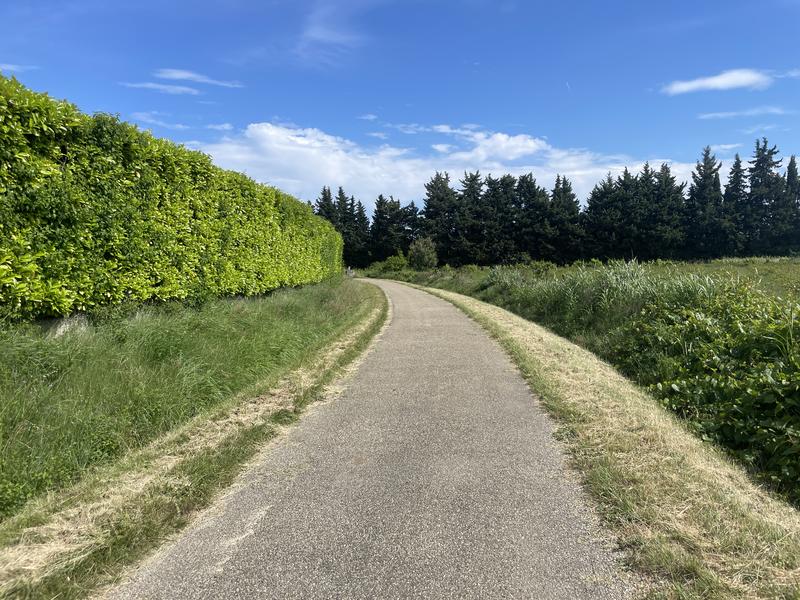
The route is little more than functional at first, threading past gravel pit quarries and then shadowing a busy autoroute. It gets more interesting after Mornas, with a traffic-free trail nestled between river and Rhône. We don’t stay here for long, instead heading east on the Via Venaissia, a new cycle route through the low-lying western Vaucluse. This is prime cycling country with hordes of families on bikes as you approach Orange – indeed, we got caught up in an amateur race while cycling the little roads through vineyards that lead to the city.
Orange (1236km) Tour de France cyclists finish their grand tour every year by riding past the Arc de Triomphe. Our tour isn’t over yet but you can still do a few laps of the Arc de Triomphe – the one in Orange, that is. It’s one of two remarkable Roman survivals in this city once described as a “miniature Rome”. The other is more impressive still: an astoundingly well preserved Roman theatre, arguably the best in Europe, restored over two centuries and now an international opera venue. The admission price is modest, and it’s worth pencilling in a couple of hours of your time. The city itself is otherwise unexceptional but perfectly pleasant, its narrow car-free streets lined with restaurants benefiting from the tourist trail.
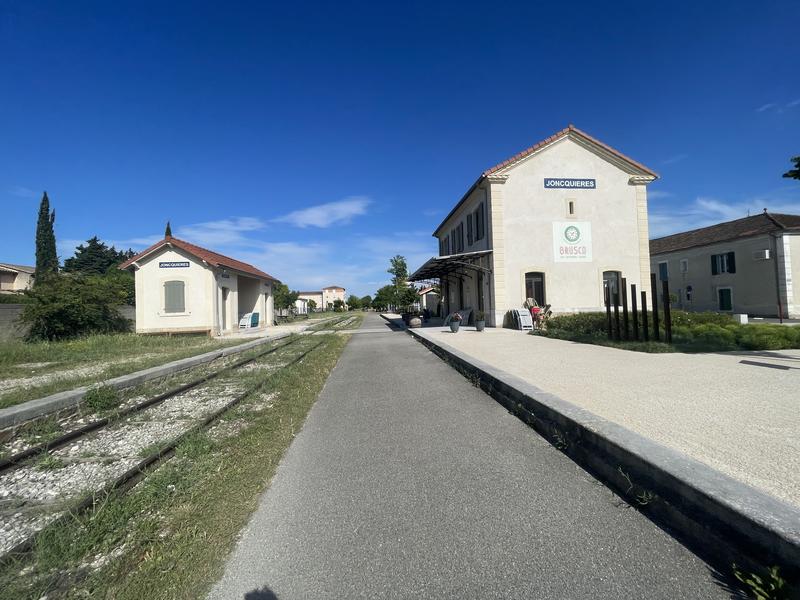
Residential roads lead to a new rail trail, a fine example of the art with a smooth asphalt surface, preserved stations and, again, crowds of local families enjoying it. This glides past the villages of Jonquières and Sarrians before an impressive restored viaduct delivers us into the centre of Carpentras. The Via Venaissia continues south here, but we strike out east on our own.
Carpentras (1260km) For the first time, this feels like Southern France: terracotta roofs, people sitting out on the streets into the evening, and Mont Ventoux looming in the distance. Carpentras is a compact city with an artistic bent – museums, galleries, conservatoire. Its charming historic centre wouldn’t detain you for long but is just right for the overnighting cyclist. If that night happens to be Thursday night, so much the better: Carpentras’s Friday market is legendary, with some 350 stalls including (in summer months) Provençal truffles.
If you really do want to ride Mont Ventoux, here’s where you do it: head out of town on the D 974 and arrive at the summit 36 horizontal km and 1800 vertical metres later. For us mortals, however, a more enjoyable ride awaits, starting with the tiny, high-banked Chemin Creux out of town. Quiet lanes lead on through Malemort to the edge of Villes sur Auzon.
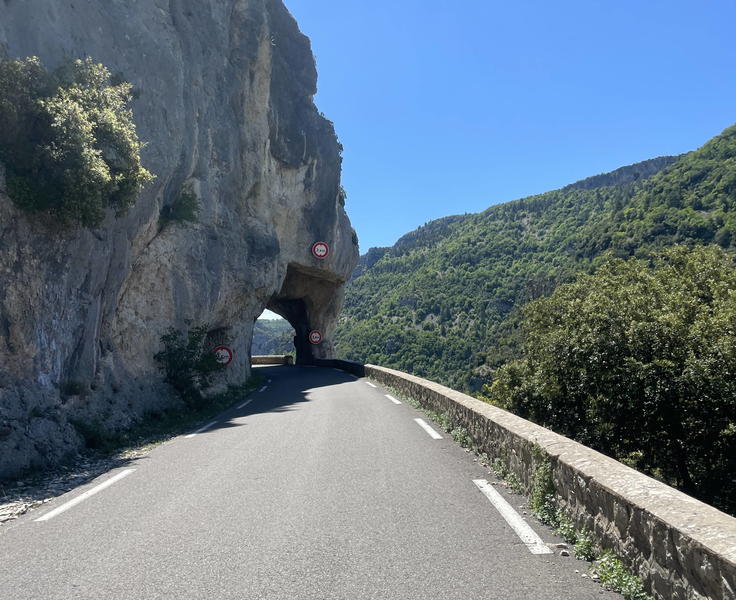
Here starts some of the most enjoyable cycling you’ll ever do: the Gorges de la Nesque. A spectacular ride up a narrow gorge, it’s all the better for its gentle, forgiving gradient. After a steep initial burst, it settles down to a steady 3%, so you can just pedal and enjoy the scenery – together with the dozens of other cyclists you’re sure to meet. Most of them seem to head back down the same way, so you’ll be on your own for the short descent to Monieux.
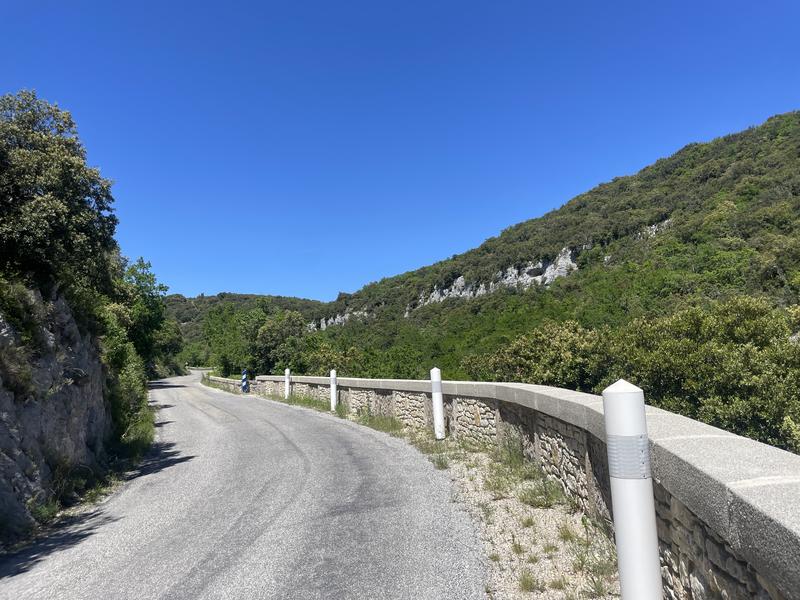
Monieux (1303km) The hamlet of Monieux is a useful pit-stop after the Gorges de la Nesque, and you might be lucky enough to find a food truck here serving hungry cyclists. The climb back out of the village is a grind but not too taxing.
There are a few places on this ride where we genuinely couldn’t decide which road to take, and this is one of them. Put simply, every road you take south to Apt is good (and downhill!). The plotted route passes the curious 15th century Chateau de Javon before a dramatic gorge-like section, then after a few twists and turns, climbs into the impossibly pretty Provençal village of Roussillon – not a strictly necessary climb, but we think you’ll agree it’s worth it. The striking red cliffs are ochre, still mined today in nearby Gargas.
Quiet roads take you to a wooded railway path through the Calavon valley. We might be some way from the sea, but EuroVelo 8, which we join here, is the Mediterranean route and you could follow it all the way to Nice. It enters Apt along a high-level rail trail looking down on the town, so you’ll need to make your way down the (steep!) hillside to visit. Should you need it, there’s an excellent bike shop (General Bike Luberon) just off the route at Le Chêne, a few km beforehand.
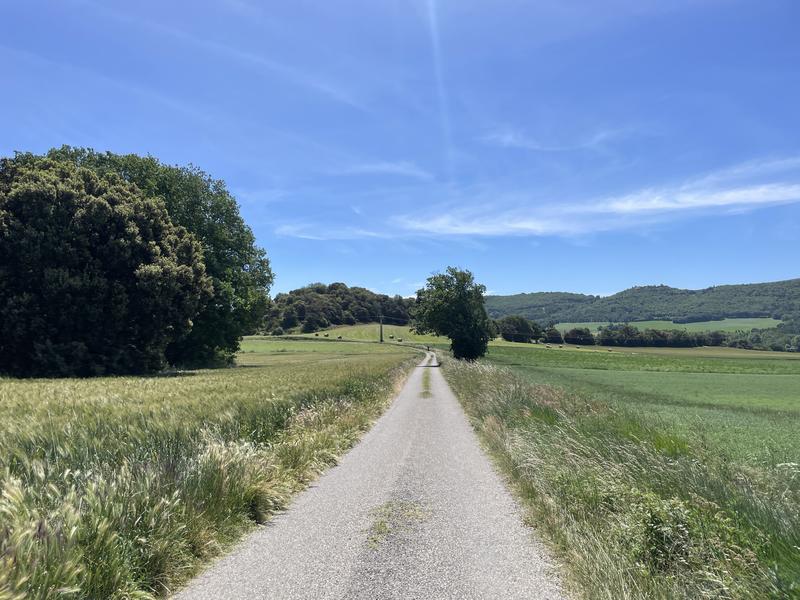
Apt (1338km) Apt is the sort of small-town France which has an air of once being bigger-town France. Apt’s historic centre is rather more spread out than you might expect, with no real focal point. It’s hardly a tourist town, but a more than pleasant place to explore for an overnight stop, with a handful of good restaurants dotted around.
In contrast, the villages of the Luberon have been eulogised in a thousand travelogues since the 1980s – the Provence of TV shows, expats’ memoirs and chocolate-box photography. Tourism hasn’t ruined it, and you could spend a happy fortnight cycling the lanes around here. The rail trail alongside the Calavon eventually gives up and EuroVelo 8 takes to the lanes, enjoyably undulating (with the odd short, sharp climb) and views across to hillside villages on the opposite bank. Céreste, on the main road, is a handy boulangerie stop, but Reillanne a little further on is the real deal – a fortified hilltop settlement with restaurants around a classic village square.
Here we leave EV8 and cross the watershed from the Calavon to Durance valleys. It’s a chunky climb to the hamlet of Villemus, with fine views back to Reillanne. The D 907 into Manosque is moderately busy but passes quickly on a fast descent.
(Alternative route: If you have time to spare, you can keep following EV8 from Reillanne to go via the pretty bookish town of Forcalquier. It’s a much longer route to Manosque, 51km vs 17km, but a chance to see more of the Luberon.)
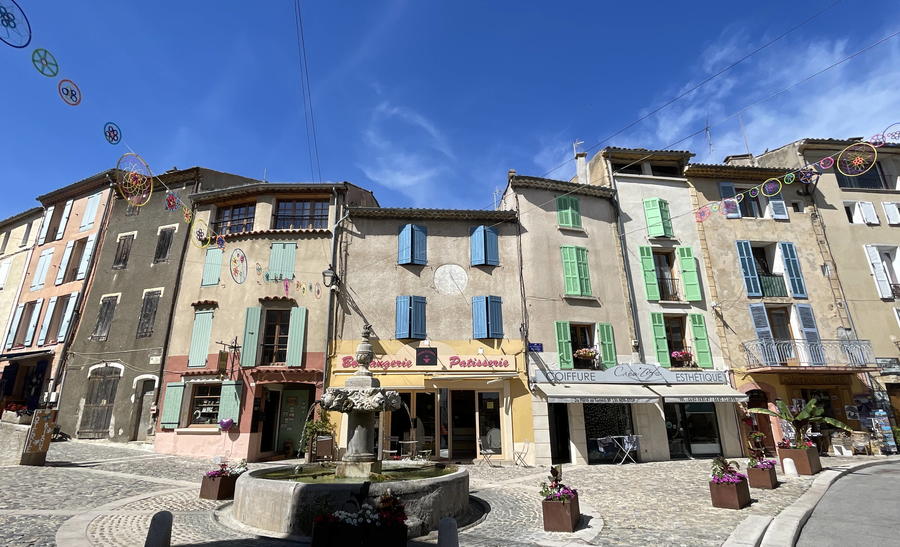
Manosque (1382km) Manosque is best known for its eponymous supermarket pizza and as the HQ of beauty chain L’Occitane, and heading through on the main road wouldn’t disabuse you of this rather industrial impression. Ride into the old town, though, and it’s a different story. Its medieval centre, entered through imposing fortified gateways, is a maze of countless little squares and tiny streets – the main shopping street, the Rue Grande, must be a contender for most misnamed street in France. Even if you’re just passing, lock up the bike for an hour and explore.
Every cycle route has its less inspiring sections, and this is ours. After the roadside cycle paths of suburban Manosque comes the climb out of the Durance valley, which is a 12km slog up the busy D 6. It gets better: the HGV traffic is mostly destined for two quarries lower down the climb, and the gradient slowly levels off. At the summit it once again takes a Provençal air with the emblematic lavender fields.
Valensole is a return to form, a visitor-centric village where you can cool off after the climb with a very welcome ice-cream. Here we have the welcome chance to take a much quieter road, still barely perceptibly climbing on back-roads to the sleepy village of Puimoisson, bouncing up and down the tiny valleys caused by every stream on this high plateau. A final descent takes you into Moustiers.
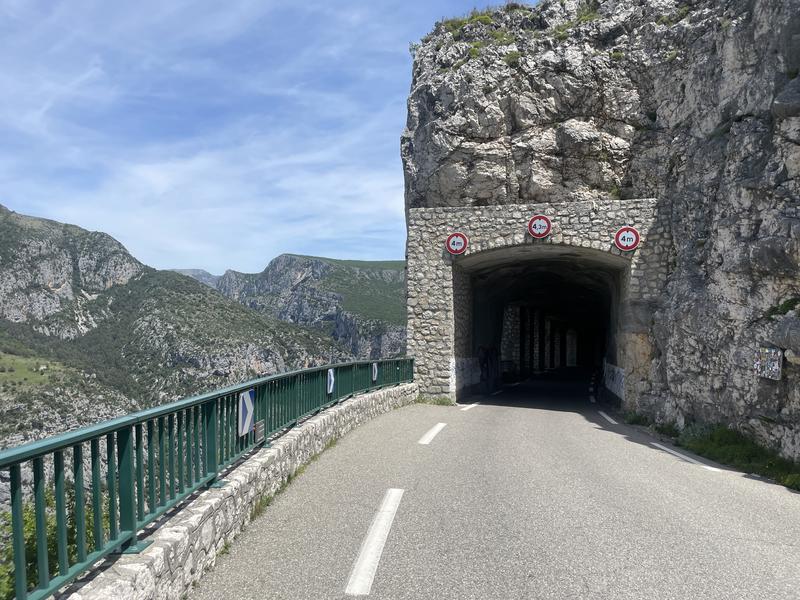
Moustiers Sainte Marie (1436km) A tough but unforgettable day in the saddle starts at Moustiers Sainte Marie. A colourful assembly of terracotta-topped buildings nestled in a steep, curving enclave, its picture-postcard quality is crowned by a star hanging from a chain between two cliffs. Entirely tourism-oriented, it’s an almost compulsory overnight before the climb to come.
Of all the gorges in this ride, the Gorges du Verdon are both the most geologically remarkable and the toughest to ride. The climbing begins immediately you turn off the Lac de Sainte Croix shore road. Up to the unassuming village of Aiguines, it’s 5-6% and scenically merely pleasant; from there, it’s 8% and scenically jaw-dropping. Described as ‘France’s Grand Canyon’, this swaps the close confines of the Ardèche and Nesque for a cinematic landscape of rocky outcrops and impossibly steep valley sides, held in by wire meshes.
The Col d’Illoire is a fine viewpoint but not the summit – that comes 3km further on. There’s no fanfare, just the elation of seeing the gradient flatten then start to descend. But the scenery rolls on for almost 20km until the Artuby bridge (and its decidedly low-rent, but very welcome, snack bar). Grit your teeth for the shorter, tough climb up to Saint Maymes, and then that’s it: the hard work is over.
Little Comps sur Artuby is what passes for a settlement round here, with a biker/cyclist-friendly cafe. Turn south here for the moderately busy D 953, passing an army camp before peeling off on the quieter D 19 to Bargemon.
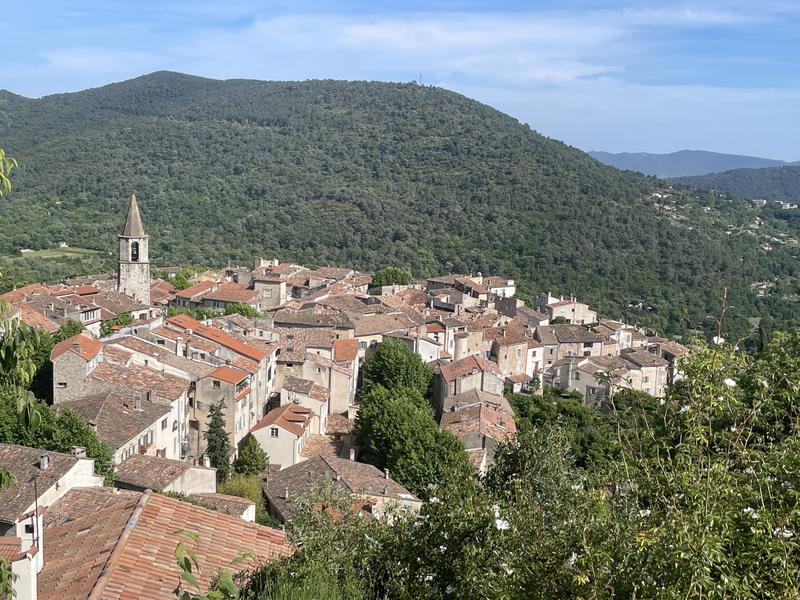
Bargemon (1507km) ‘Perched villages’ are the archetypal Provençal settlement, built on the hillsides when the valley floors were sufficiently poor quality land as to not be worth cultivating. This is one of the finest belts of them, from Callas to Montauroux.
You might expect that hillside villages go along with tough climbs, but not here. We meet EuroVelo 8 again for an extraordinarily looping rail trail – curiously, one which is mostly open to cars as well as bikes, but the traffic is minimal. Tunnels, viaducts, gradients (fairly fearsome for a railway!) and the winding cliff-edge course kept train speeds on the old Ligne Central-Var down to just 20km/h. Tree cover and cuttings limit the views today, but occasionally these open out to give glimpses of the deeply forested valleys.
Bargemon is the first perched village you’ll pass through, a gorgeous settlement with a carefully preserved medieval quarter, no shortage of English tourists, and a handful of estate agents catering for dreaming expats. All the others – Claviers, Seillans, Fayence, Callian and Montauroux – are a short distance off the route. Seillans, the most attractive, can be reached directly from Bargemon on a very scenic single-lane road.
The railway path ends at Fayence, and the cycle route is a work in progress from here: choose between the busy D 19 and the gravelly voie verte running parallel. EV8 then meanders on back roads for a short while before joining the busy D 562 for a fast descent to Château Tournon.
Accommodation can fill up quickly in these small villages and it’s worth booking in advance.
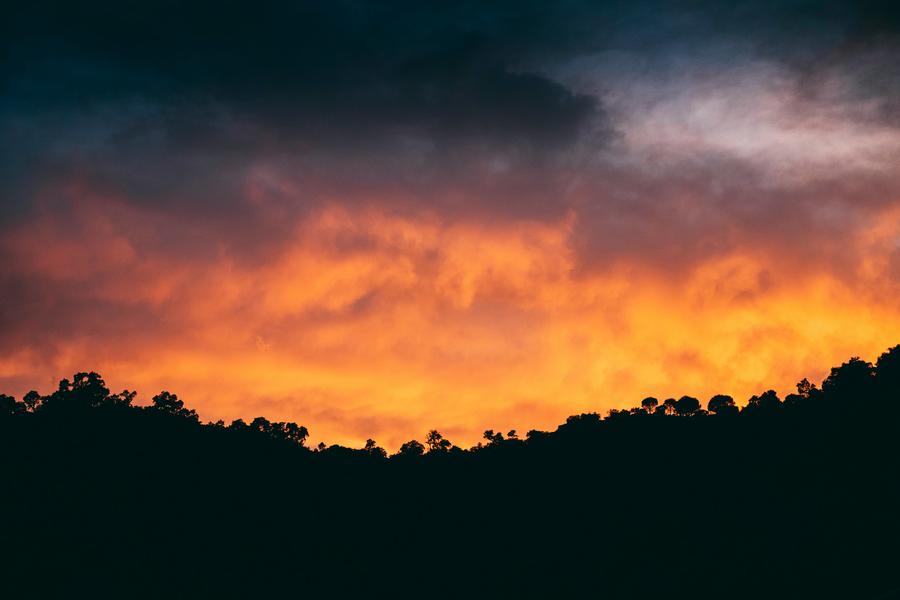
Château Tournon (1540km) One last climb! We leave EV8 here for reasons we’ll explain below, choosing instead to surmount the Massif du Tanneron. This is Europe’s largest mimosa forest, a wilderness just a short way from the Nice metropolis. Mimosa blooms in the winter, so unless you’re particularly hardy, you won’t see the full yellow splendour during your ride. Happily, this is a scenic route at any time of year on a winding, narrow road – the sort of ride where a new view opens up at every corner.
That’s particularly true once you’ve passed the village of Tanneron. Here, the views take in the sprawling suburbs of Nice and, eventually, the Mediterranean itself – your first view of the sea since Mont Saint Michel. First, though, there’s the small matter of the climb. It averages 5% from the narrow Biançon bridge to Tanneron. After a short dip, there’s then a 7–8% ascent to Les Plaines. Your reward is a fast, furious descent on a wide road, the Mediterranean ahead of you.
Alternative routes: We’ve intentionally diverged from EuroVelo 8 here. Although EV8 avoids most of the climbing, it’s not a great route: a forgettable stretch on residential roads is followed by an unrideable MTB track and then some rather dismal cycle tracks through industrial areas. The Tanneron route described here is tougher, but much more enjoyable. Another possibility is to follow the V65 route around the north of Nice, which picks up the old railway line in places, before ducking down towards the city centre somewhere near Vence/Saint Jeannet. This has more climbing overall, and you won’t see much of the Riviera, but offers good views and a chance to see how the affluent live!
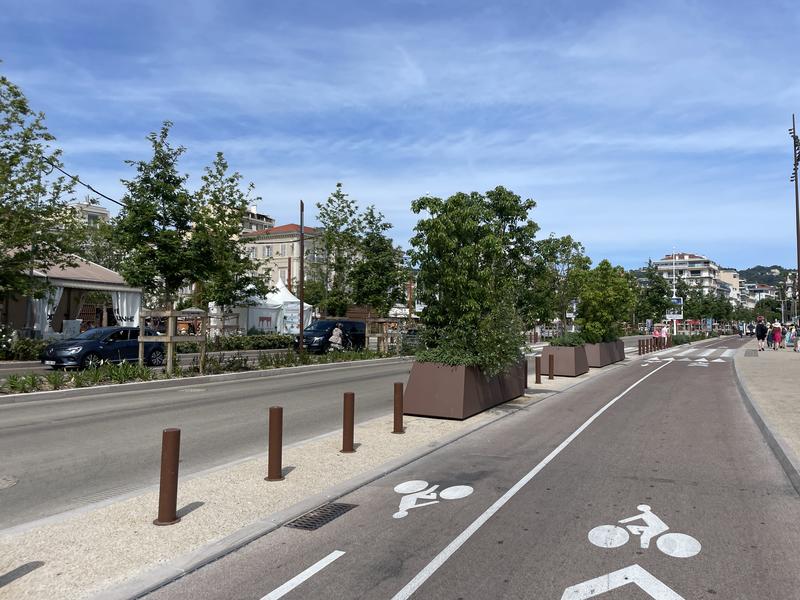
Mandelieu la Napoule (1563km) Welcome to the opulent, magnificent chaos that is the Riviera. The good news: there is a cycle path almost all the way through Cannes and Antibes to Nice. The bad news: you try telling the pedestrians that. Flat it might be, but this is not a route where you’re going to set your personal best time. Still, this coastal tour of the Mediterranean’s chic-est neighbourhoods is endlessly fascinating: palm trees hiding impossibly expensive residences, sports car dealerships, high fashion retailers, big-ticket restaurants, yacht life, and above all, views of the sea.
The first section through Cannes is on a sometimes congested road with token bike symbols painted on the carriageway, but before long you’re onto a cycle path where the main hazard is panini shacks rather than Porsches. After Cannes, the housing retreats for a short while and you can put the hammer down on a high quality cycleway nestled between road and railway. The marinas here are almost cities in their own right, acres of gleaming white plastic surrounded by bistros serving local seafood.
You could choose to plan your ride for the early morning, making good progress before the crowds arrive. But it’s just as tempting to take it easy – enjoy the Mediterranean sun, stop at any café or beach shack that takes your eye, and revel in having climbed your last hill.
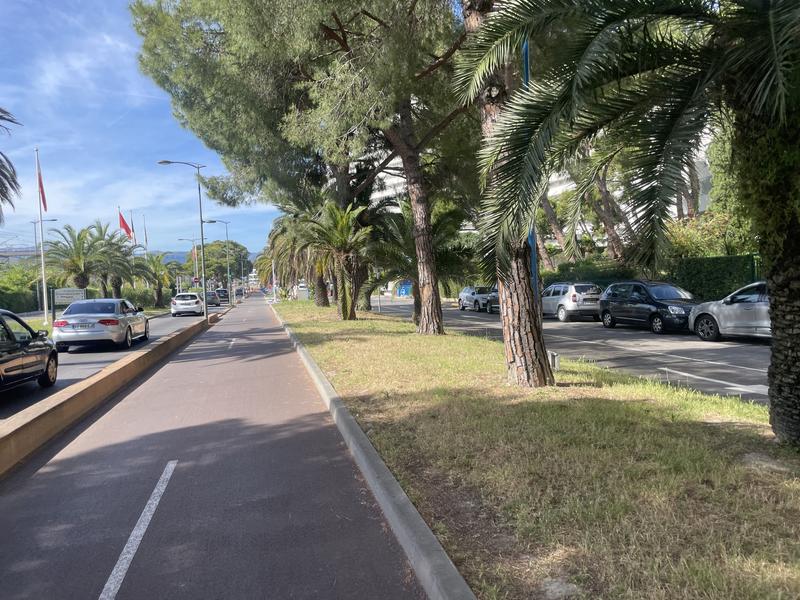
Antibes (1584km) The largest yachting resort in Europe, Antibes is much more historic, and less concrete-clad, than you might expect. This is a town of museums and music festivals, sea traders, salt fish, and St Peter (patron saint of fishermen). The EuroVelo route passes through town on the Cours Masséna, a busy street of bars, restaurants and the daily Provençal produce market. The town centre rolls out to the west, perhaps more tilted to fashion and beauty than a typical French town but with plenty of restaurants should you choose this for your last overnight stop. Making your way through the crowds can be tricky, so take a tip from the Tour de France and find a moto to slipstream!
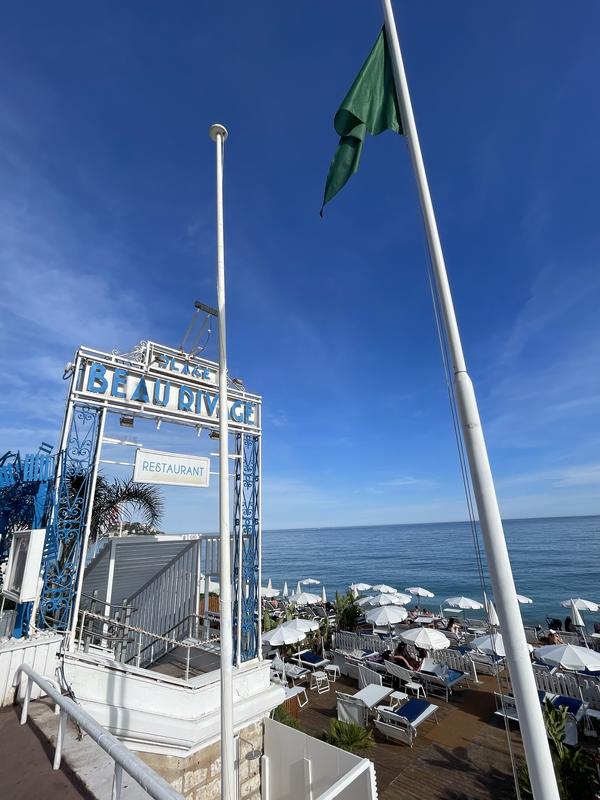
Nice (1604km) Journey’s end. Nice is a place of great cycling significance; the eight-day ‘Race to the Sun’, Paris–Nice, typically finishes on the famous palm tree-lined Promenade des Anglais. (You might have guessed this from the name, but given that it doesn’t really start in Paris any more, all bets are off.)
With the promenades on one side, and the beautiful azure Mediterranean on the other, the final kilometres are an easy cruise towards the historic citadel. Slow down, and bask in the achievement of 1000 miles from coast to coast. Amazingly, Nice is only the second major city on our whole route (Angers being the first). It’s a fascinating mix of eras, from prehistoric archaeological remains to modern bling, via medieval pomp and fin de siècle glamour. But that does mean you’re spoiled for choice in celebrating your ride, from an ice-cream on the seafront to a slap-up meal in the old town – maybe with local specialities like a salade Niçoise, tourte aux blettes, pissaladiere… or why not all of them? You have, without doubt, earned it.


Made in the Cotswolds. Published by Éditions Système D Ltd.
Log in with your cycle.travel account:
| Password |
Or simply use your account on:

 (3)
(3)
 (47)
(47)
